
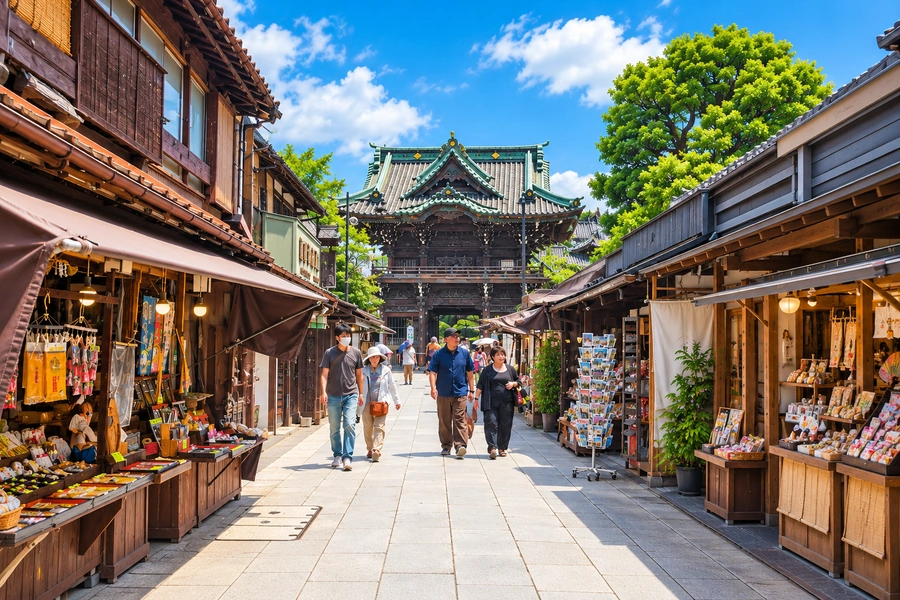
If you are looking for a quieter, more traditional side of Tokyo, Shibamata Taishakuten is a place I would definitely recommend adding to your itinerary.
Located in Katsushika in northeastern Tokyo, Shibamata feels surprisingly different from the busy areas most first-time visitors associate with the city. Instead of skyscrapers and crowded shopping streets, you find an old-fashioned temple district, traditional Japanese shops, beautiful gardens, wooden architecture, and a much slower pace.
I recently visited Shibamata Taishakuten, and what I loved most was that the visit was not just about seeing a temple. There was a whole atmosphere to experience — from the nostalgic street leading to the temple to the incredible wood carvings, peaceful Japanese garden, small souvenir shops, and traditional sweets.
If you have already visited places such as Senso-ji in Asakusa and want to discover a different side of Tokyo, Shibamata is worth considering.
What Is Shibamata Taishakuten?
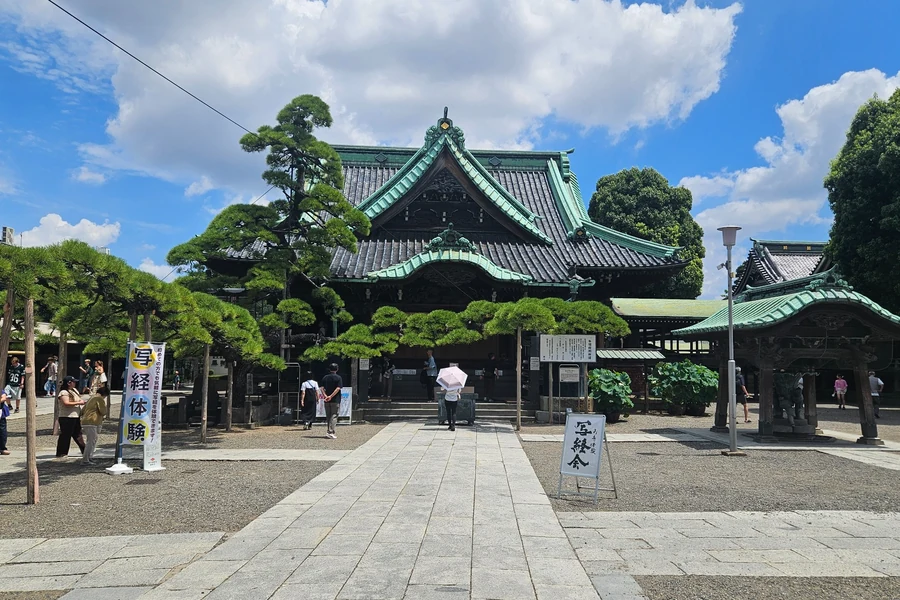
Shibamata Taishakuten is the popular name for Daikyoji Temple, a Buddhist temple in Shibamata, Tokyo. The temple was founded in 1629 and has been an important part of the local community for centuries.
The temple stands at the end of Taishakuten Sando, a traditional shopping street that begins near Shibamata Station.
This is one of the things that makes visiting Shibamata so enjoyable. You don’t simply arrive at a large tourist attraction, take a few photographs, and leave. Instead, you walk through an old Tokyo neighborhood before reaching the temple itself.
The official Tokyo travel guide describes Shibamata as a nostalgic neighborhood that feels like stepping back in time. The area is also famous as the hometown of Tora-san, the beloved character from the long-running Japanese film series Otoko wa Tsurai yo.
Getting to Shibamata Taishakuten from Tokyo
One of the reasons I like Shibamata as a Tokyo excursion is that it is relatively easy to reach without leaving Tokyo.
The simplest option is to take the Keisei Line to Shibamata Station. From the station, Shibamata Taishakuten is only about a three-minute walk.
The route itself is part of the experience.
When you leave the station, you will find the bronze statue of Tora-san and the beginning of Taishakuten Sando. From there, simply walk along the traditional shopping street toward the temple.
Can you visit Shibamata by car?
Yes.
Since I live in Tokyo, I would personally consider renting a car if you want to combine Shibamata with several other places around eastern Tokyo or the surrounding area. Having a car gives you more flexibility, especially if you are planning a full day of sightseeing rather than visiting Shibamata alone.
However, you absolutely don’t need a car for Shibamata.
For this particular destination, public transportation is easy and convenient. You can take the train, get off at Shibamata Station, and walk directly through the historic shopping street to the temple.
So if you’re wondering how to get to Shibamata Taishakuten from Tokyo without a car, the answer is simple: take the train to Shibamata Station.
Walking Along Taishakuten Sando
Before you even reach the temple, take some time to explore Taishakuten Sando.
This approximately 200-meter-long traditional street connects Shibamata Station with the temple and has retained much of its old-fashioned character.
There are small restaurants, traditional sweets shops, souvenir stores, rice cracker shops, and places selling local specialties.
One of the most famous things to try in Shibamata is kusa dango, a type of Japanese rice dumpling traditionally associated with the area. You will also find freshly made rice crackers and other Japanese snacks along the street.
I recommend not rushing this part of the visit.
Walk slowly, look into the small shops, and enjoy the contrast between this old-fashioned neighborhood and the modern Tokyo that you probably saw on the way there.
Entering Shibamata Taishakuten
At the end of the shopping street, you will see the impressive entrance to Shibamata Taishakuten.
The Nitenmon Gate was built in 1896 and is made from zelkova wood. It is one of the first details that makes the temple feel so different from many of Tokyo’s more modern tourist attractions.
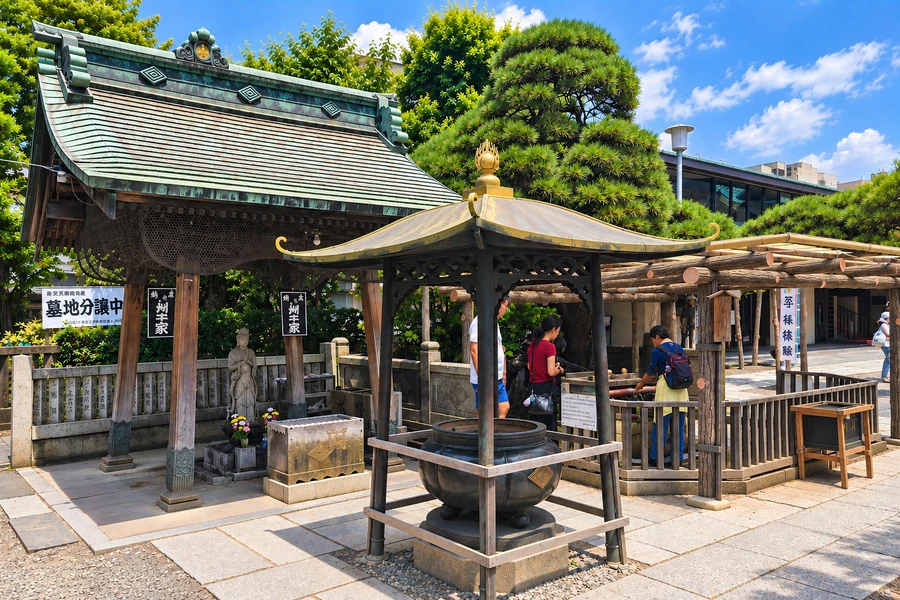
The temple grounds are spacious, green, and filled with beautifully maintained trees.
One of my favorite things about the temple was the combination of architecture and nature. The dark wooden buildings, green copper roofs, carefully shaped pine trees, and bright summer sky made the entire place incredibly photogenic.
The Incredible Wood Carvings at Shibamata Taishakuten
If you visit Shibamata Taishakuten, don’t skip the sculpture gallery.
This was probably the most impressive part of my visit.
The temple is famous for its extraordinarily detailed wooden carvings. The sculptures decorating the Taishakudo Hall are based on stories from the Lotus Sutra and were created by highly skilled craftsmen over a period of more than ten years, with the work completed in 1934.
And when I say detailed, I really mean detailed.
Look closely and you can see:
- dragons
- flowers
- birds
- waves
- clouds
- trees
- human figures
- Buddhist stories
- incredibly delicate facial expressions
The craftsmanship is extraordinary.
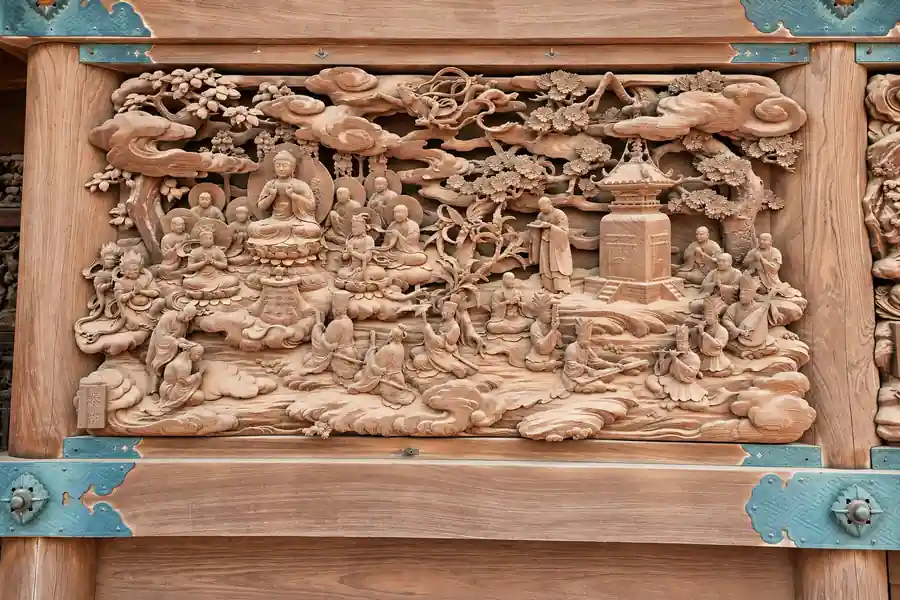
The carvings are protected inside the temple, which means you can take your time looking at the details without worrying about the weather.
I found myself looking at individual sections for quite a while because there is so much to see.
This is one of those places where having your camera ready is definitely worthwhile.
Suikeien: The Japanese Garden at Shibamata Taishakuten
After the detailed carvings, the atmosphere changes completely when you enter Suikeien Garden.
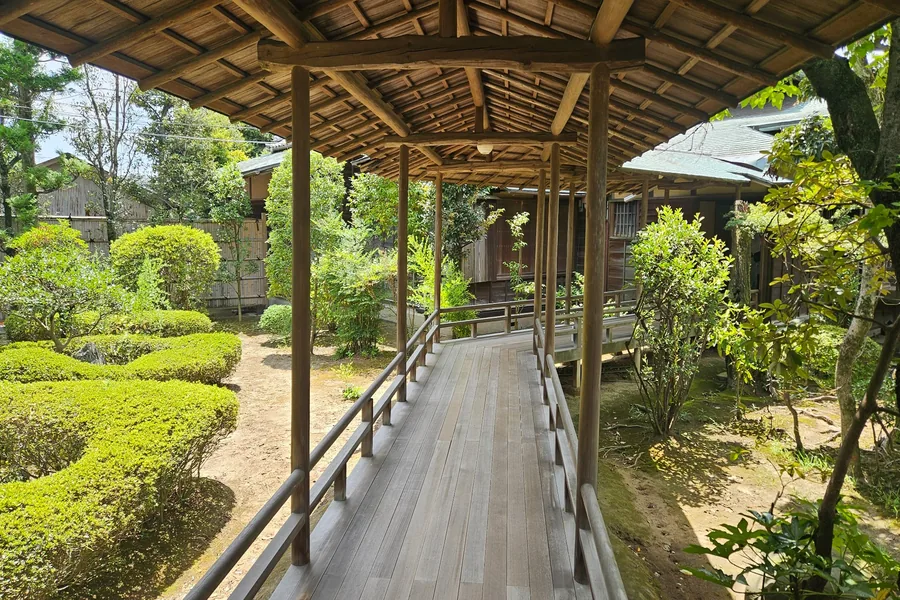
The garden is a beautiful traditional Japanese strolling garden with ponds, rocks, pine trees, carefully shaped shrubs, and covered walkways.
It covers approximately 2,000 square meters and was developed over several decades. The garden was later extensively redesigned by the famous gardener Nagai Rakuzan and reached its current form in 1965.
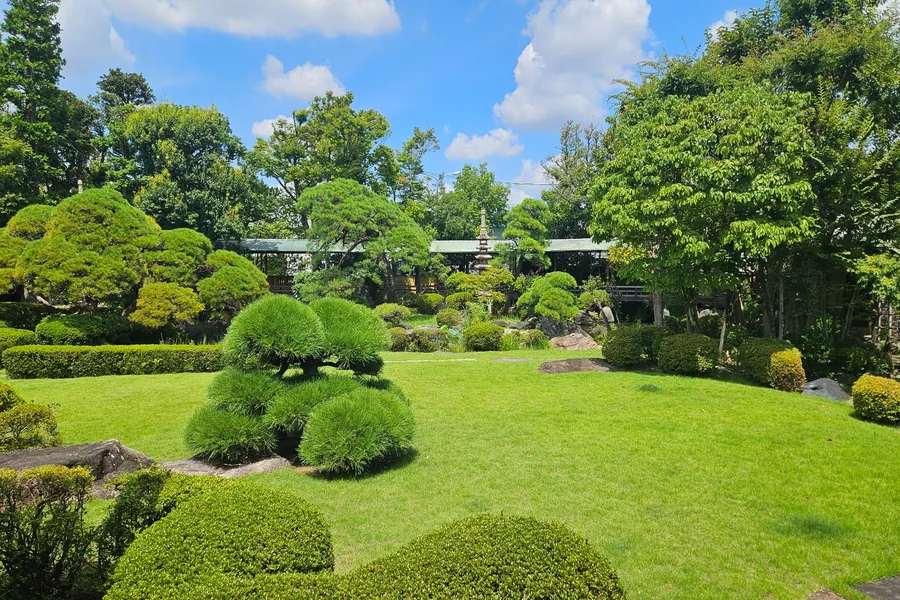
This was another highlight for me.
The garden is not huge, but it feels very carefully composed. There are different views as you walk around, with water, rocks, pine trees, traditional buildings, and covered wooden corridors appearing from different angles.
If you enjoy Japanese gardens in Tokyo, this is definitely one to put on your list.
It is also a lovely place to slow down after walking through the busier shopping street.
Try an Omikuji for Just 100 Yen
One of the small experiences I recommend trying at Shibamata Taishakuten is an omikuji, or Japanese fortune slip.
A traditional omikuji is a small paper fortune that can tell you whether your luck is excellent, good, neutral, or unfortunately not so good.
At Shibamata Taishakuten, the regular omikuji has traditionally been available for 100 yen.
There is also a particularly fun lion-dance omikuji machine, which I noticed during my visit.
You put in the money and the little mechanical lion performs before delivering your fortune.
It is one of those small, slightly unusual Japanese experiences that makes a visit more memorable.
And don’t worry if you don’t get the best fortune.
You are in Japan — getting a kyo (bad fortune) is not the end of the world!
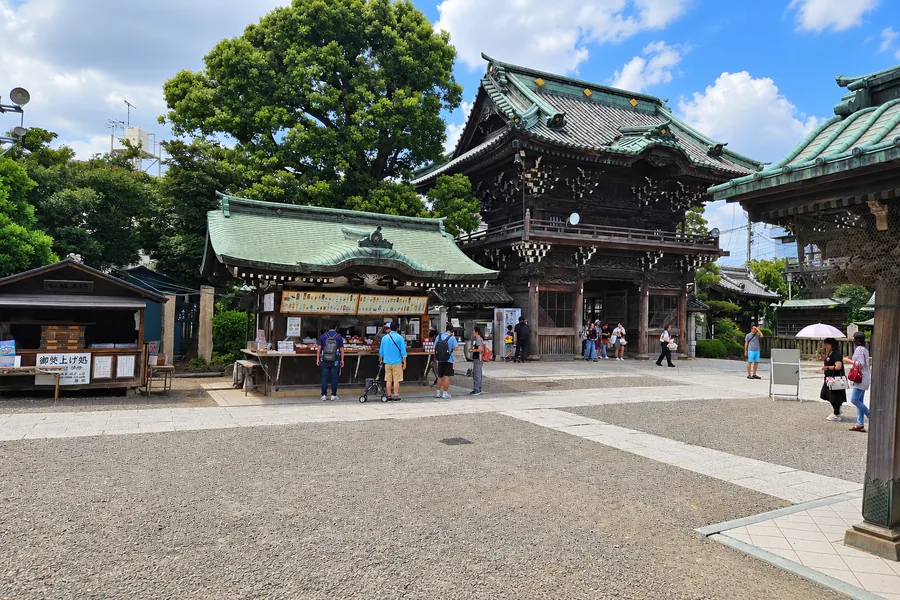
Souvenirs, Amulets and Traditional Japanese Gifts
Shibamata Taishakuten is also a good place to look for traditional Japanese souvenirs.
Inside the temple grounds, you can find an amulet area where various omamori (Japanese protective charms) are available. The temple offers charms associated with different purposes, including health, protection, travel safety, good fortune, work, relationships, and other wishes.
You can also find:
- Japanese amulets
- goshuin
- goshuincho
- ema
- incense
- prayer beads
- small temple souvenirs
I particularly like buying a small omamori when visiting Japanese temples because it is much more meaningful than a generic souvenir from a tourist shop.
The temple also has an official selection of amulets and other items, with different charms representing things such as health, travel safety, financial luck, protection, relationships, academics, work, and more.
Don’t Leave Without Exploring the Neighborhood
One of the biggest mistakes would be visiting only the temple and immediately returning to the station.
There is more to see around Shibamata.
After visiting Taishakuten, you can continue toward Yamamoto-tei, a historic Japanese house with a beautiful garden, or visit the Katsushika Shibamata Tora-san Museum. The area also has access to the Edogawa River, making it possible to turn your temple visit into a longer half-day outing.
If you have extra time, I would combine:
Shibamata Station → Taishakuten Sando → Shibamata Taishakuten → Sculpture Gallery → Suikeien Garden → Yamamoto-tei → Tora-san Museum → Edogawa River
That gives you a much more complete experience of traditional Shibamata.
How Long Do You Need in Shibamata?
For Shibamata Taishakuten alone, I would allow around 1.5–2 hours.
If you want to explore the shopping street, eat something, visit the garden, and see some of the other attractions around Shibamata, I would plan half a day.
That is one reason I think Shibamata works so well as a Tokyo sightseeing experience.
You don’t have to rush from one famous attraction to another.
You can simply walk.
Shibamata Taishakuten vs. Senso-ji
If you’re deciding which Tokyo temple to visit, these two experiences are quite different.
| Shibamata Taishakuten | Senso-ji | |
|---|---|---|
| Atmosphere | Quiet and nostalgic | Busy and energetic |
| Area | Traditional residential Tokyo | Central Asakusa |
| Famous for | Wood carvings and garden | Kaminarimon and main temple |
| Shopping | Small traditional shops | Large tourist shopping street |
| Best for | Slow sightseeing | First-time Tokyo visitors |
| Crowds | Generally calmer | Often very busy |
| Experience | Old downtown Tokyo | One of Tokyo’s major landmarks |
If it is your first trip to Tokyo, I would still visit Senso-ji.
But if you have already seen the major attractions and want to discover traditional Tokyo away from the main tourist crowds, I think Shibamata is a wonderful choice.
Shibamata Taishakuten Practical Information
Location
7-10-3 Shibamata, Katsushika City, Tokyo
Nearest station
Shibamata Station — Keisei Kanamachi Line
The temple is approximately three minutes on foot from the station.
Sculpture Gallery and Garden
The Sculpture Gallery and Suikeien Garden are currently open 9:00 AM–4:00 PM, closing at 4:30 PM.
Admission is:
- Adults: ¥400
- Elementary and junior high school students: ¥200
The same admission covers both the sculpture gallery and the garden.
By car
If you are renting a car in Tokyo, driving to Shibamata is possible, and the temple has paid parking. The official parking information currently lists regular cars at ¥200 per 30 minutes, with a maximum of ¥1,500.
However, for Shibamata itself, I would not rent a car just for this one destination. The train is easy.
If you are planning a wider Tokyo day trip by car, though, renting a car can make sense because you can combine several less-central destinations in one day.
Is Shibamata Taishakuten Worth Visiting?
Yes — especially if you want to see a different side of Tokyo.
What I enjoyed most was that Shibamata doesn’t feel like a single tourist attraction. It feels like a real neighborhood with its own history, traditions, food, small shops, and slower rhythm.
The temple itself is beautiful, but the combination of Taishakuten Sando, the intricate wood carvings, Suikeien Japanese garden, traditional souvenirs, omikuji, local sweets, and the surrounding old Tokyo atmosphere is what makes the experience special.
And for me, this is exactly the kind of place that makes living in Tokyo interesting.
There are the famous places everyone knows — and then there are neighborhoods like Shibamata that you can discover more slowly.
If you’re searching for hidden gems in Tokyo, traditional Tokyo neighborhoods, unique places to visit in Tokyo, or quieter Tokyo sightseeing spots, put Shibamata on your list.
It may not be the first place that comes to mind when you think of Tokyo.
And that’s precisely why I think it’s worth visiting.



No responses yet