
Strawberry Picking in Tokyo: A Fun Winter Activity
Looking for something different to do in Tokyo during winter? Strawberry picking is a seasonal activity that combines fresh Japanese strawberries with a fun greenhouse experience.
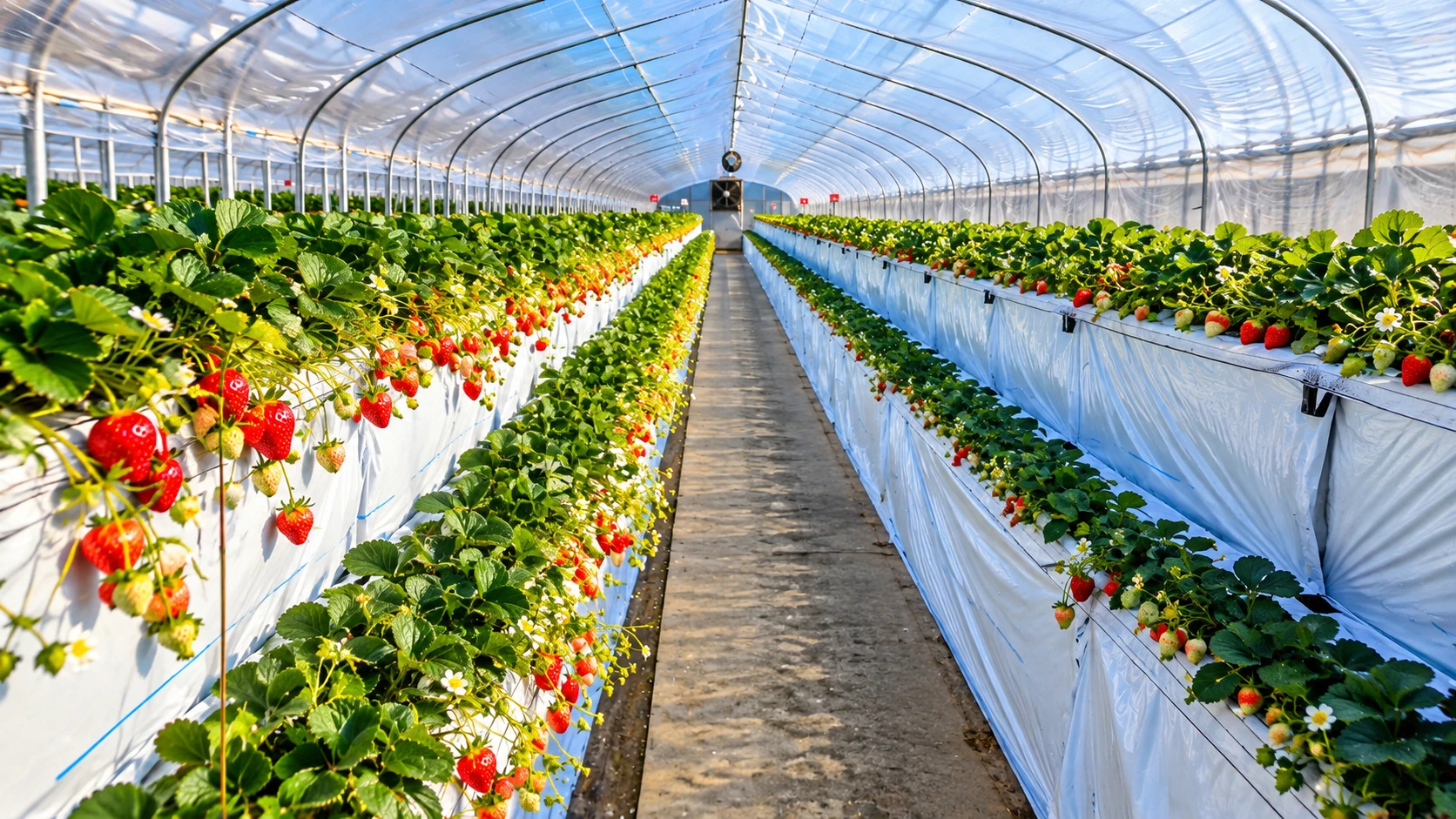
Known as ichigo-gari (いちご狩り), the activity involves entering a greenhouse, picking ripe strawberries directly from the plants, and eating them on the spot. Many farms offer all-you-can-eat sessions for a fixed price, usually lasting 30 minutes.
And you don’t have to travel far into the countryside. Tokyo has strawberry farms in areas such as Setagaya, Fuchu, Mitaka and Machida, while even more options are available in nearby Chiba. Many use elevated cultivation, making the strawberries easy to pick without bending down.
For visitors, couples, families, or anyone who has already done the usual Tokyo sightseeing, strawberry picking makes a refreshing winter day trip.
When Is Strawberry Picking Season in Tokyo?
The main strawberry-picking season in Tokyo runs through the winter and spring months.
The exact dates depend on the farm, but recent Tokyo seasons have generally started between December and January and continued until May or June. For example, Setagaya Strawberry Farm operated from January 4 through May 31 in 2026, while Fuchu Strawberry Picking Farm ran from January 4 until late May.
Best Months to Go
January to March is a particularly good period for a classic winter strawberry-picking experience.
A simple guide:
- December: some farms begin opening
- January–March: peak winter season
- April: warmer weather and continued availability
- May: late-season picking at many farms
- June: some farms may continue, depending on the crop
There is no single best month for every farm. If you want the widest choice of farms and varieties, January through March is a good starting point.
Why Strawberry Picking Works So Well in Winter
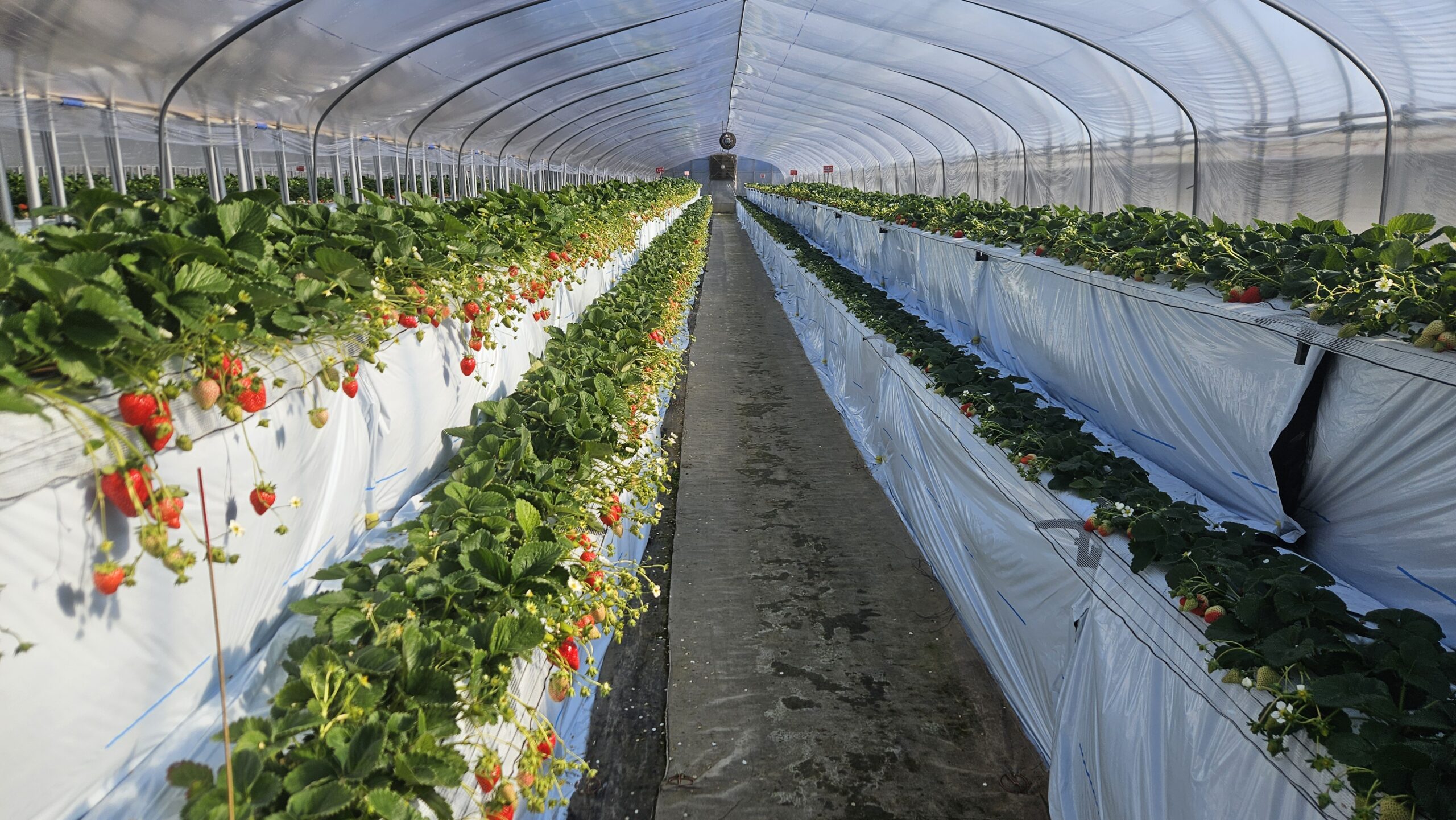
The strawberries are grown inside greenhouses, so you can enjoy the activity even when it is cold outside.
Many farms use elevated growing beds, which keep the plants at a comfortable height and make picking easier. Fuchu Strawberry Picking Farm, for example, uses elevated cultivation and has paths designed to make the experience accessible for visitors using wheelchairs or strollers.
The greenhouse can also become surprisingly warm on a sunny day, so layers are more practical than a heavy winter coat.
It is a particularly nice alternative to another day spent in shopping malls or crowded tourist districts.
How Does Strawberry Picking in Tokyo Work?
The process is straightforward.
After arriving at the farm, you check in and enter the greenhouse. Depending on the farm, staff may explain which areas are open and how to pick the fruit.
If you’ve booked an all-you-can-eat session, you then have a set amount of time to pick and eat strawberries.
In Japan, this format is called 食べ放題 (tabehodai).
At many Tokyo farms, the session lasts 30 minutes. Fuchu Strawberry Picking Farm currently describes its experience as a 30-minute all-you-can-eat session.
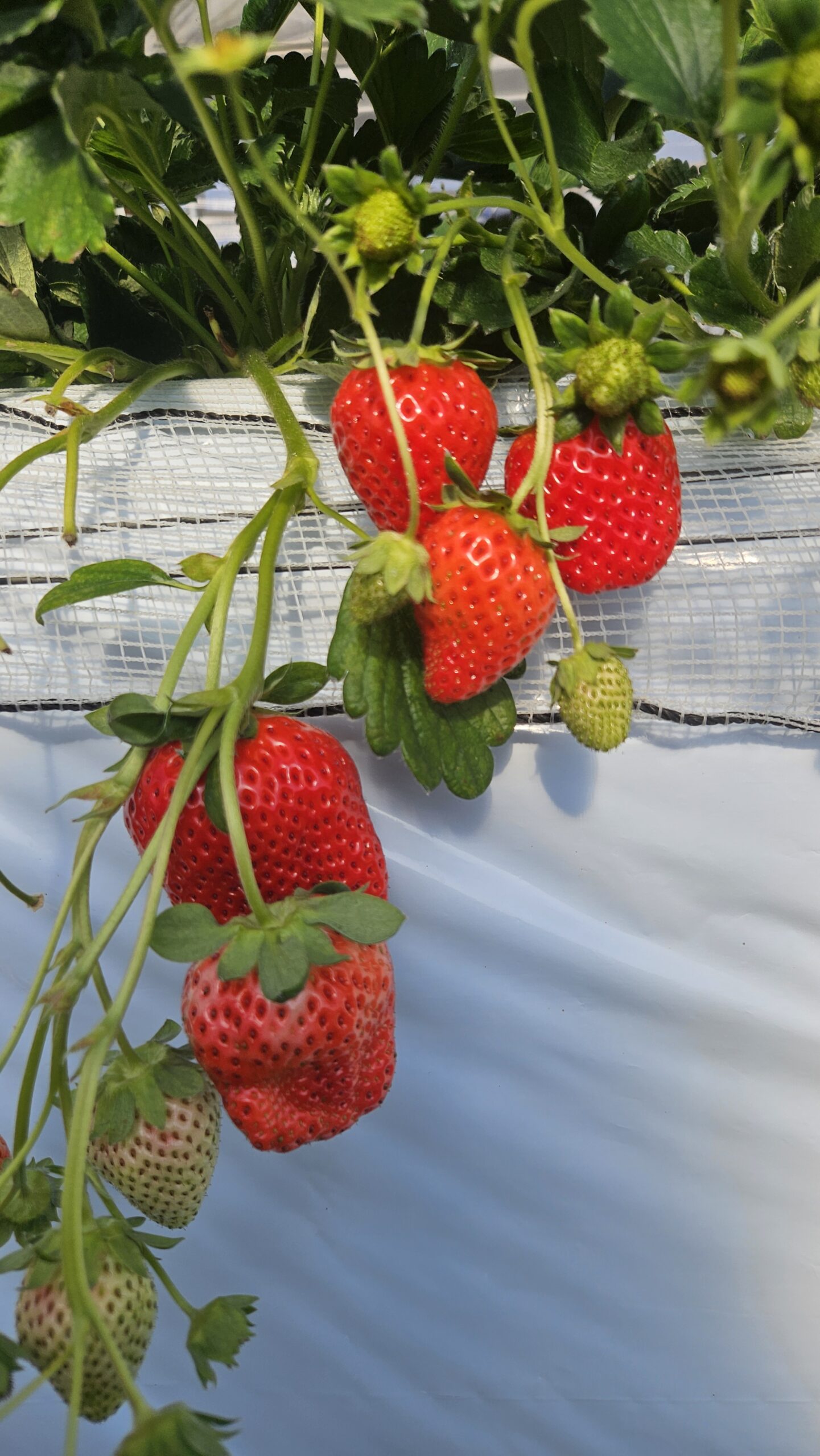
The idea is not simply to eat as many strawberries as possible. If several varieties are available, the more interesting approach is to taste them and compare their sweetness, acidity, aroma, and texture.
Some farms also provide condensed milk or chocolate sauce. Fuchu Strawberry Picking Farm, for example, offers unlimited condensed milk and chocolate sauce.
How Much Does Strawberry Picking Cost in Tokyo?
A useful current guide is around ¥3,000–¥4,000 per adult for 30 minutes of all-you-can-eat strawberry picking in Tokyo. Prices vary by farm, season, weekday, and age.
For the 2026 season, examples included:
- Setagaya Strawberry Farm: ¥3,000 for adults, according to its 2026 listing.
- Fuchu Strawberry Picking Farm: ¥3,200 on weekdays and ¥3,500 on weekends for adults in the 2026 season.
- Ichigo Land Ishiino Farm: ¥3,000 on weekdays and ¥3,500 on weekends and holidays for adults.
- ICHIGOHOUSE.MITAKA: ¥4,000 for visitors of elementary-school age and older in the 2026 listing.
Prices for the 2026–27 season may change, so check the farm’s official website before booking.
Best Strawberry Picking Farms in Tokyo
If you want to stay within Tokyo, these are some of the most useful options to know.
1. Setagaya Strawberry Farm
Address: 4-32-1 Nakamachi, Setagaya City, Tokyo 158-0091
Japanese address: 東京都世田谷区中町4-32-1
Nearest station: Kaminoge Station, about 10 minutes on foot
Format: 30-minute all-you-can-eat
Reservation: Required
Parking: No
Setagaya Strawberry Farm is one of the most convenient options for visitors who don’t want to travel far from central Tokyo.
It is located in a residential part of Setagaya, and the strawberry plants are grown at a comfortable picking height. The 2026 season ran from January 4 to May 31.
The farm grows varieties including Beni Hoppe, Yotsuboshi and Berry Pop Suzu.
Best for: travelers looking for strawberry picking without leaving Tokyo.
2. Fuchu Strawberry Picking Farm
Address: 3-16-2 Miyoshi-cho, Fuchu, Tokyo 183-0045
Japanese address: 東京都府中市美好町3-16-2
Nearest station: Bubaigawara Station, about 8 minutes on foot
Format: 30-minute all-you-can-eat
Reservation: Required
Parking: No
This is one of the easiest farms to reach by train.
The farm is about eight minutes from Bubaigawara Station and offers elevated strawberry cultivation. In the 2026 season, visitors could taste Yumenoka, Yotsuboshi, Kaorino and Beni Hoppe.
There is also a Tokyo Strawberry Café next to the farm, making it easy to combine strawberry picking with dessert or a light meal.
Best for: tourists traveling without a car, couples, and families.
3. Ichigo Land Ishiino Farm
Address: 2-6-52 Kitano, Mitaka, Tokyo 181-0003
Japanese address: 東京都三鷹市北野2-6-52
Format: 30-minute all-you-can-eat
Reservation: Check current farm information before visiting
Take-home strawberries: Available separately
This is one of the more interesting choices if your main goal is trying different varieties.
The farm offered around nine varieties in the 2026 season, including Sagahonoka, Beni Hoppe, Toukun, Roman Berry, Ama Queen and several original varieties.
It also offers strawberries for purchase, so you don’t have to leave empty-handed after your picking session.
Best for: strawberry lovers who want to compare unusual varieties.
4. ICHIGOHOUSE.MITAKA
Address: 1-8-8 Mure, Mitaka, Tokyo 181-0002
Japanese address: 東京都三鷹市牟礼1-8-8
Format: All-you-can-eat
2026 adult price: ¥4,000
ICHIGOHOUSE.MITAKA is interesting because it uses both traditional soil cultivation and elevated cultivation. Its 2026 listing included varieties such as Kaorino, Koinomiori, Benikaori, Mikunoka, Hoshiurara and Yukizakura.
The farm also offers strawberries for take-home purchase.
Best for: visitors who want to see different growing methods and try several varieties.
5. Machida Strawberry Farm
Area: Machida, Tokyo
Format: 30-minute all-you-can-eat
2026 adult price: ¥2,800
Reservation: Required
Machida Strawberry Farm is another option if you are exploring western Tokyo.
The 2026 season included Oishee Berry, Kaorino, Yotsuboshi and Suzu, with the exact availability depending on growing conditions.
Best for: visitors looking for a somewhat more affordable Tokyo option.
Strawberry Picking Near Tokyo: Chiba
If you’re willing to travel outside Tokyo, Chiba is one of the best nearby areas for strawberry picking.
Chiba is a major strawberry-growing region and has numerous farms accessible from the Tokyo metropolitan area. The prefecture’s official tourism website lists many farms and notes that the season generally runs into early May, although dates, prices, varieties and availability vary by farm.
This is especially worth considering if you’re traveling by car.
Dragon Farm, Chiba
Address: 1354 Oguracho, Wakaba Ward, Chiba City, Chiba 264-0007
Japanese address: 千葉県千葉市若葉区小倉町1354
Format: 30-minute all-you-can-eat
2026 adult price: ¥3,200
Access: About 20 minutes on foot from Chishirodai-kita Station
Dragon Farm is particularly interesting because it offered up to 20 strawberry varieties during the 2026 season, although the number available depends on growing conditions.
It is a good choice if you want to turn strawberry picking into a proper tasting experience.
Best for: strawberry enthusiasts who want to compare many varieties.
Furukawa Orchards, Ichikawa
Address: 4-2771 Onomachi, Ichikawa, Chiba 272-0805
Japanese address: 千葉県市川市大野町4-2771
Ichikawa is relatively close to Tokyo, making this a practical Chiba option for a day trip.
The farm offers greenhouse strawberry picking, including a 40-minute all-you-can-eat format, giving visitors more time than the standard 30-minute sessions found at many Tokyo farms.
Best for: families or anyone who doesn’t want to rush through a 30-minute session.
Japanese Strawberry Varieties Worth Trying
One of the best reasons to go strawberry picking in Japan is the variety of cultivars.
Depending on the farm and season, you may encounter several different types during one visit.
Beni Hoppe — 紅ほっぺ
One of Japan’s best-known strawberry varieties.
It has a strong strawberry flavor, noticeable sweetness, and some acidity. The berries are generally large and deep red.
Best for: people who like a classic sweet-and-tart strawberry.
Tochiotome — とちおとめ
A famous variety originally developed in Tochigi.
It is known for its balance of sweetness and acidity and remains one of Japan’s familiar strawberry varieties.
Akihime — 章姫
Akihime has an elongated shape and relatively low acidity.
Best for: anyone who prefers very sweet, soft and juicy strawberries.
Yotsuboshi — よつぼし
Yotsuboshi is known for its sweetness and aroma. It is also attractive when photographed because of its rich red color.
Yumenoka — ゆめのか
Yumenoka has a refreshing balance of sweetness and acidity. It is one of the varieties available at Fuchu Strawberry Picking Farm.
How to Get the Most Out of a 30-Minute Strawberry Session
Don’t spend the first five minutes eating the biggest strawberries you can find.
Instead:
1. Taste each variety first.
If several cultivars are available, try them without toppings.
2. Compare the flavor.
Notice which ones are sweeter, more acidic, softer, firmer, or more aromatic.
3. Look for fully ripe fruit.
A deep, even color is generally a good sign, although appearance varies by variety.
4. Go back to your favorite.
Once you’ve compared them, concentrate on the variety you liked most.
5. Try condensed milk last.
It is delicious, but it can mask the differences between varieties.

What Should You Wear to Strawberry Picking?
Don’t dress only for the temperature outside.
Greenhouses can become quite warm, particularly on sunny winter days.
Wear:
- comfortable shoes;
- layers that can be removed;
- casual clothing;
- darker colors if possible.
Strawberry juice can stain, so a white outfit isn’t the best choice.
Wet wipes are also useful, especially if you’re traveling with children.
Do You Need a Reservation?
Often, yes.
The rules differ from farm to farm.
Setagaya Strawberry Farm and Fuchu Strawberry Picking Farm require reservations, while Ichigo Land Ishiino has offered sessions without advance reservations.
Always check the current booking system before going.
It is also worth checking the farm’s website or social media shortly before your visit. Strawberry availability depends on the harvest, and farms may change their opening hours or stop accepting visitors when there are not enough ripe berries.
This is particularly important in Chiba, where the official tourism website advises visitors to confirm the latest conditions because availability, dates and varieties can change according to the crop.
Can You Go Strawberry Picking on a Rainy Day?
Yes.
Most strawberry picking takes place inside greenhouses, so rain does not normally prevent the activity.
You still need to walk from the station or parking area to the farm, but once inside, you’re protected from the weather.
This makes strawberry picking one of the better rainy-day activities in Tokyo during winter and spring.
Strawberry Picking Is a Great Tokyo Date Idea
Strawberry picking works particularly well as a winter date because it is short, casual, and interactive.
You can spend 30 minutes picking strawberries and then continue with lunch, coffee, shopping, or sightseeing.
At Fuchu Strawberry Picking Farm, for example, the nearby Tokyo Strawberry Café makes it easy to add strawberry desserts to the outing.
It also gives you something to do together rather than simply sitting across from each other at a restaurant.
Best Strawberry Farms in and Around Tokyo
| Farm | Area | All-you-can-eat | Adult price* | Access |
|---|---|---|---|---|
| Setagaya Strawberry Farm | Setagaya, Tokyo | 30 min | ¥3,000 | 10 min from Kaminoge Station |
| Fuchu Strawberry Picking Farm | Fuchu, Tokyo | 30 min | ¥3,200–¥3,500 | 8 min from Bubaigawara Station |
| Ichigo Land Ishiino | Mitaka, Tokyo | 30 min | ¥3,000–¥3,500 | Mitaka |
| ICHIGOHOUSE.MITAKA | Mitaka, Tokyo | Yes | ¥4,000 | Mitaka |
| Machida Strawberry Farm | Machida, Tokyo | 30 min | ¥2,800 | Machida |
| Dragon Farm | Chiba | 30 min | ¥3,200 | Chiba City |
| Furukawa Orchards | Ichikawa, Chiba | 40 min | Check current price | Ichikawa |
*Prices are based on published 2026 information and are provided as a guide. Prices, opening dates, available varieties and reservation rules can change for the 2026–27 season.
Frequently Asked Questions
When is strawberry picking season in Tokyo?
The season generally runs from winter through spring, with farms opening from December or January and some continuing into May or June. Exact dates depend on the farm and growing conditions.
What is the best month for strawberry picking in Tokyo?
January through March is a good choice for the classic winter experience. April and May are also possible at many farms.
How much does strawberry picking cost in Tokyo?
A typical 30-minute all-you-can-eat session costs approximately ¥3,000–¥4,000 per adult, although individual farms may charge less or more.
Can I eat unlimited strawberries?
Yes, if the farm offers tabehodai (食べ放題). You can eat as many strawberries as you want during the specified session.
Can I take strawberries home?
It depends on the farm. Some offer separate take-home sales or allow visitors to pick strawberries and pay by weight. An all-you-can-eat session itself does not necessarily include strawberries to take home.
Do Tokyo farms grow different strawberry varieties?
Yes. Depending on the farm, you may be able to compare several varieties during one visit. Fuchu Strawberry Picking Farm, for example, grows Yumenoka, Yotsuboshi, Kaorino and Beni Hoppe.
Do I need a car?
No. Several farms in Tokyo are easily accessible by train. Fuchu Strawberry Picking Farm is about eight minutes from Bubaigawara Station, and Setagaya Strawberry Farm is about 10 minutes from Kaminoge Station.
Is strawberry picking open in winter?
Yes. Winter is one of the main strawberry-picking seasons in Japan.
Is strawberry picking suitable for adults?
Absolutely. It is popular with couples, friends, families, and solo travelers—not just children.
Final Thoughts
Strawberry picking is one of the most enjoyable ways to spend a winter day in Tokyo.
You don’t need to travel deep into the countryside. Farms in Setagaya, Fuchu, Mitaka and other parts of Tokyo allow you to reach a greenhouse by train, pick strawberries directly from the plants, and eat them fresh for a fixed price.
For around ¥3,000–¥4,000 at many Tokyo farms, you can also compare Japanese varieties such as Beni Hoppe, Yotsuboshi and Yumenoka.
If you want more choice, nearby Chiba has even more farms and some offer a much larger selection of varieties.
Whether you go with a partner, friends, family, or simply because you love strawberries, ichigo-gari is a seasonal Japanese experience worth adding to your winter Tokyo itinerary.
Before you go, check the farm’s latest schedule, price and reservation requirements—the strawberry season depends on the crop, and popular sessions can fill quickly.



No responses yet