
Kokeshi Dolls: Meaning, History and Why They’re Special
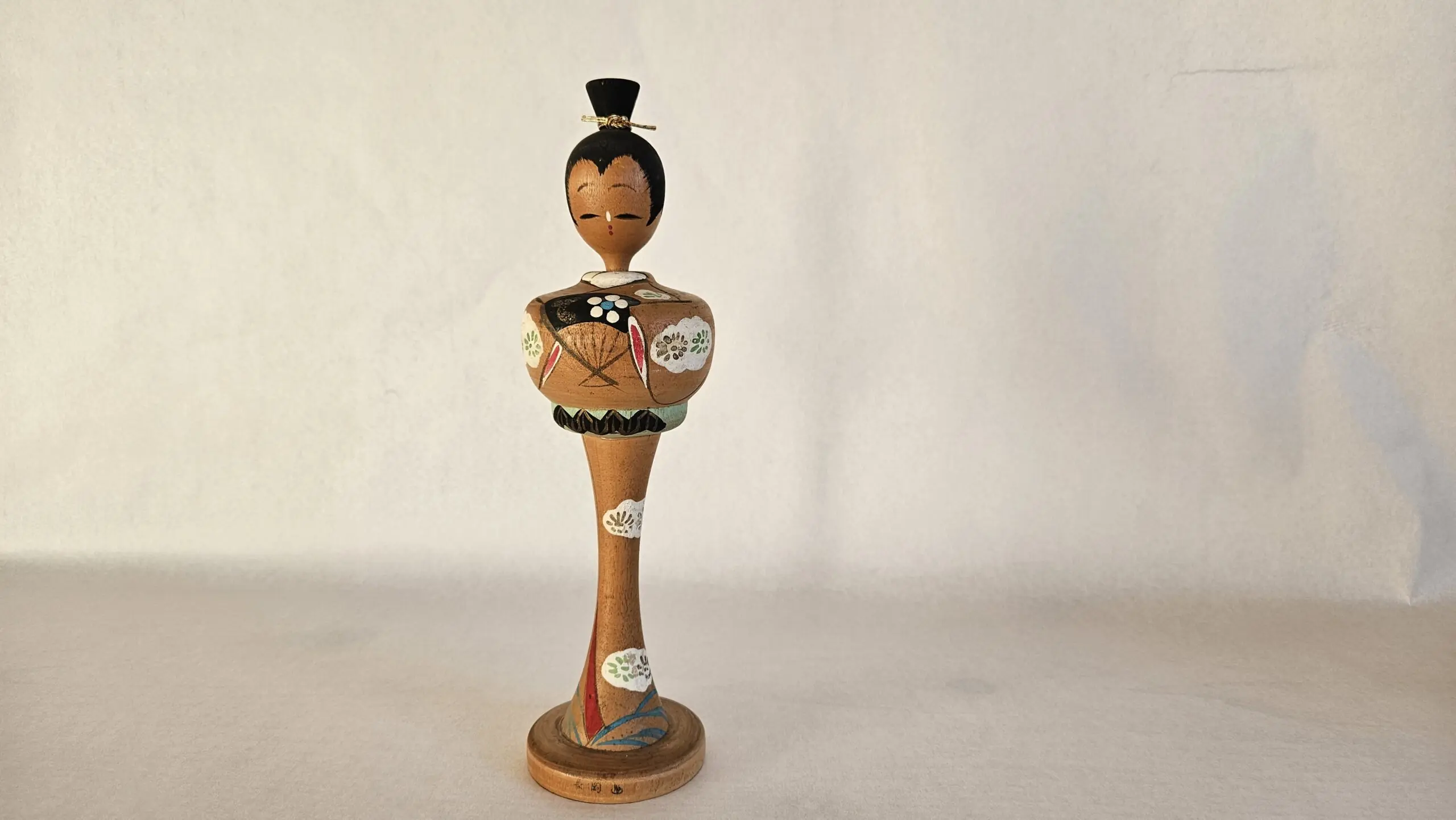
If you have ever visited Japan, you may have noticed small wooden dolls with round heads, simple faces, and colorful painted bodies. These are kokeshi dolls, one of Japan’s most recognizable traditional wooden crafts.
At first glance, kokeshi look deceptively simple. Most have no arms or legs, and their bodies are made from just a few basic shapes. But behind that simplicity is a long history of woodworking, regional traditions, and individual craftsmanship.
Kokeshi originated in the Tohoku region of northeastern Japan and became closely associated with the area’s hot spring towns. Today, they range from traditional regional designs to contemporary artistic pieces that look more like small sculptures.
So what exactly are kokeshi dolls, what do they mean, and why are they still popular today?
What Are Kokeshi Dolls?
Kokeshi are Japanese wooden dolls traditionally made by turning wood on a lathe. Their characteristic shape consists of a rounded head and a simple cylindrical body.
Traditional kokeshi usually have:
- a large, rounded head;
- a narrow or cylindrical body;
- no arms or legs;
- painted facial features;
- decorative patterns on the body.
Flowers, leaves, stripes, and geometric designs are common decorations. The face is usually deliberately simple, with just a few lines used to create the eyes, eyebrows, and mouth.
The dolls are traditionally associated with Tohoku, where woodworkers developed specialized techniques for turning local timber into household objects and toys.
Their simplicity is part of their appeal. Even when several kokeshi have the same basic shape, differences in their faces, hairstyles, colors, and patterns can give each one a completely different personality.
The History of Kokeshi Dolls
Kokeshi developed in the Tohoku region during the Edo period (1603–1868). The craft grew from the area’s established woodworking traditions, particularly in communities around hot spring resorts.
Woodworkers already used lathes to make objects such as bowls and trays. Creating small wooden figures was a natural extension of these skills.
From Wooden Toys to Souvenirs
Kokeshi became particularly popular in the hot spring towns of Tohoku.
People traveled to these resorts to enjoy the area’s natural hot springs, and visitors often bought local crafts to take home. Small wooden dolls were practical souvenirs: they were relatively inexpensive, easy to carry, and represented the local craftsmanship.
Over time, different communities developed their own recognizable styles.
Today, 11 traditional kokeshi styles are recognized across the six prefectures of Tohoku. They differ in body shape, facial features, hairstyles, and decorative patterns.
This regional variety is one of the most interesting aspects of kokeshi. The dolls may look similar to someone seeing them for the first time, but collectors can identify important differences between traditional styles.
What Do Kokeshi Dolls Mean?
There is no single meaning that applies to every kokeshi doll.
Their original role was closely connected to toys, local craftsmanship, and souvenirs from hot spring destinations. Over time, they also became valued as examples of Japanese folk art and regional culture.
Today, the meaning of a kokeshi often depends on the context.
A traveler may buy one as a reminder of Japan. A collector may choose one because of its regional style or maker. Someone else may simply like the doll’s expression and use it as a decorative object at home.
Kokeshi are also sometimes associated with children and wishes for their well-being, although this symbolism should not be treated as a universal meaning for every doll.
If you are giving a kokeshi as a gift, its connection with Japanese culture and craftsmanship can be more important than trying to find a fixed symbolic interpretation.
Traditional vs. Creative Kokeshi Dolls
Not all kokeshi look the same. One of the most useful distinctions to know is the difference between traditional kokeshi and creative kokeshi.
Traditional Kokeshi
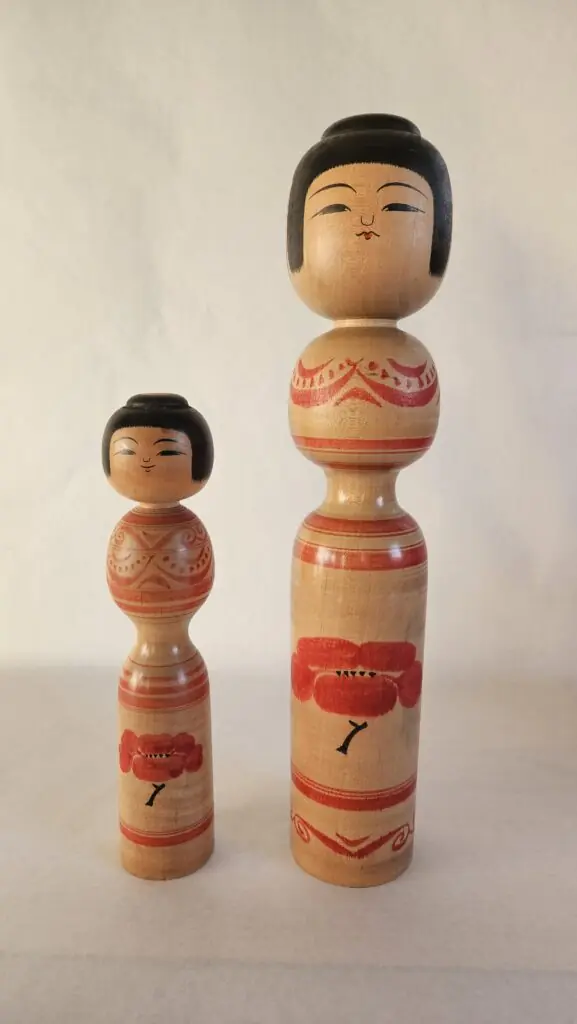
Traditional kokeshi (dentō kokeshi) follow established regional styles that developed in Tohoku.
Their designs are relatively restrained, and their shapes and decorative patterns reflect the traditions of specific areas.
Some styles have particularly recognizable characteristics. For example, Naruko kokeshi are famous for a distinctive feature: their heads can make a soft squeaking sound when turned.
Other traditional styles include Togatta, Yajiro, Tsuchiyu, and Tsugaru, each with its own characteristics.
If you are buying a kokeshi as a collectible, knowing the regional style can make the experience much more interesting.
Creative Kokeshi
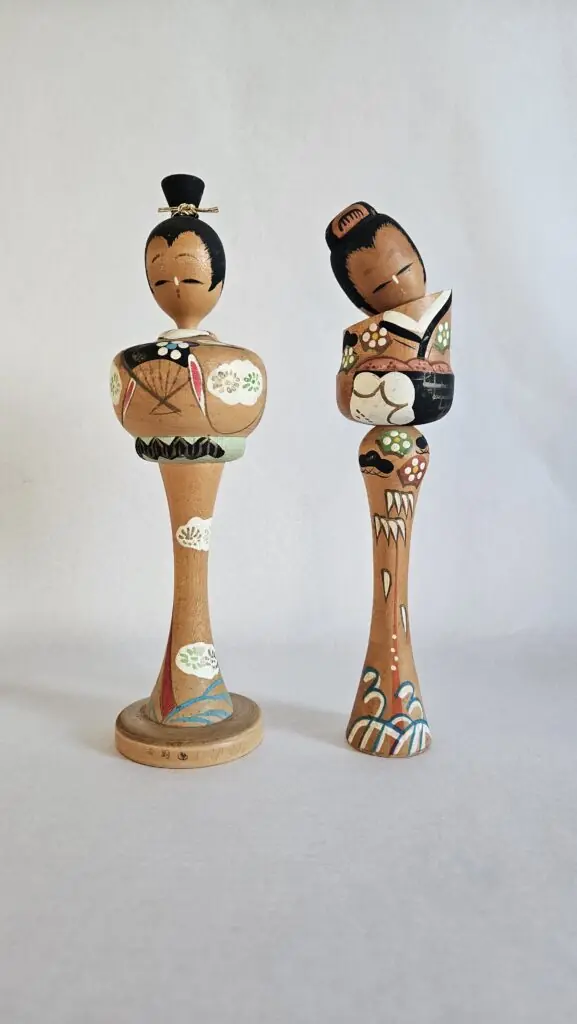
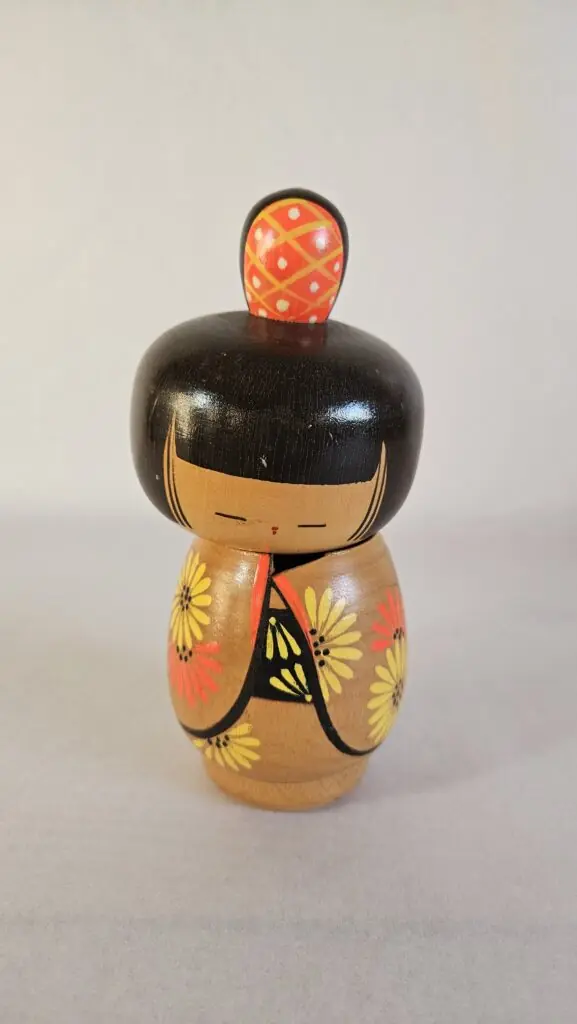
Creative kokeshi, or sōsaku kokeshi, take a much freer approach.
The style developed after World War II, when artists and woodworkers began experimenting with new shapes, colors, proportions, and decorative techniques.
Creative kokeshi can be surprisingly modern. Some have exaggerated heads, unusual bodies, bold colors, or highly stylized faces.
This is where kokeshi become particularly interesting for people who enjoy contemporary design. A creative kokeshi can look just as natural on a modern bookshelf as it would in a traditional Japanese setting.
How Are Kokeshi Dolls Made?
The basic process starts with a piece of wood.
The wood is mounted on a lathe and gradually shaped while it rotates. The artisan creates the head and body by carefully removing material with specialized tools.
Once the basic form is finished, the surface is smoothed and the doll is painted.
The face and body decoration are usually applied by hand. This is where the personality of the finished doll emerges.
Traditional kokeshi makers often work within established regional techniques, while creative kokeshi artists have considerably more freedom.
The result is a small object that combines woodworking and painting in a single piece.
This also explains why handmade kokeshi can have small variations. Slight differences in the painted lines or the shape of the wood are not necessarily flaws—they can be part of the character of a handmade object.
Why Are Kokeshi Dolls Popular in Japan?
Kokeshi have survived for generations partly because they have adapted to changing tastes.
Traditional designs continue to represent regional craft traditions, while contemporary artists have found ways to reinterpret the familiar form.
They are also easy to collect.
A kokeshi doll doesn’t require much space, so you can display one on a bookshelf or collect several without needing a large cabinet. Different colors, sizes, and styles make it easy to create a collection with a personal character.
And unlike many typical tourist souvenirs, a good kokeshi can remain part of your home long after the trip is over.
Kokeshi Dolls as Japanese Souvenirs
If you are looking for an authentic Japanese souvenir, a kokeshi is worth considering.
The strongest connection to the craft is in Tohoku, particularly around traditional hot spring destinations. Towns such as Naruko Onsen in Miyagi Prefecture are well known for kokeshi and offer opportunities to see the craft in person.
Some workshops allow visitors to watch artisans work or even try painting their own wooden doll.
This can be a much more memorable experience than simply buying a souvenir from a large tourist shop.
And if you’re planning a wider trip around Japan, it’s worth exploring destinations beyond Tokyo and Kyoto. Our guide to the best places to visit in Japan includes ideas for adding less obvious destinations to a Japanese itinerary.
What to Look for When Buying a Kokeshi
If you want to buy a kokeshi in Japan, pay attention to:
The maker. If the doll is handmade, ask who made it and where.
The regional style. Traditional kokeshi can be associated with particular areas of Tohoku.
The details. Look closely at the face, body decoration, and finish of the wood.
The size. Small dolls are easier to pack, while larger ones make a stronger decorative statement.
The information provided by the seller. If you are interested in collecting, documentation about the maker and origin can be valuable.
Don’t assume that an old-looking doll is automatically antique or valuable. Age, condition, maker, rarity, and provenance all matter when determining collectibility.
How to Display Kokeshi Dolls at Home
You don’t need a traditional Japanese interior to decorate with kokeshi.
Their simple shape works surprisingly well with modern, minimalist, and eclectic interiors.
On a Bookshelf
Place one doll between books or create a small group of two or three.
Leave some empty space around the dolls so their faces and painted patterns remain visible.
On a Console Table
A kokeshi can become a small focal point on an entryway or living room console.
Pair it with a ceramic vase, a small plant, or another natural material rather than surrounding it with too many decorative objects.
In a Minimalist Interior
A wooden kokeshi can add warmth to a neutral room without making it look cluttered.
Choose a simple design if the room already has several decorative elements, or use a colorful creative kokeshi as a small accent.
As a Small Collection
Several dolls can look especially attractive when grouped together.
Try arranging them by height, color, or style. You can also deliberately mix traditional-looking and contemporary designs.
Are Kokeshi Dolls Collectible?
Yes. Kokeshi are collected by people interested in Japanese folk art, regional crafts, woodworking, and decorative objects.
There are several ways to collect them.
Some people focus on a particular traditional style or region. Others collect work by specific artisans. And some simply choose dolls that appeal to them visually.
For beginners, the last approach is perfectly reasonable.
You don’t need an extensive knowledge of Japanese folk art to start a collection. Begin with pieces you genuinely like, then learn more about their makers and regional traditions as your interest develops.
Are Older Kokeshi Dolls More Valuable?
Not necessarily.
A doll’s age alone does not determine its value. The maker, rarity, condition, provenance, and demand among collectors can all be important.
If you’re buying an expensive or supposedly antique kokeshi, ask the seller for information about its origin and maker rather than relying on appearance alone.
For an ordinary souvenir, however, monetary value may be beside the point. The best kokeshi is often simply the one that reminds you of a memorable place or experience.
Frequently Asked Questions About Kokeshi Dolls
What are kokeshi dolls?
Kokeshi are Japanese wooden dolls traditionally associated with the Tohoku region. They typically have rounded heads, cylindrical bodies, and painted faces and decorations.
Where did kokeshi dolls originate?
Kokeshi originated in the Tohoku region of northeastern Japan. The craft developed from local woodworking traditions and became particularly associated with hot spring resorts.
What do kokeshi dolls symbolize?
Kokeshi do not have one universal symbolic meaning. They have historical connections with toys, souvenirs, regional craftsmanship, and Japanese folk art. Some traditions also associate them with children and their well-being.
What is the difference between traditional and creative kokeshi?
Traditional kokeshi follow established regional styles from Tohoku. Creative kokeshi, or sōsaku kokeshi, allow artists much more freedom in shape, color, and decoration.
Where can I buy kokeshi dolls in Japan?
Tohoku is the traditional home of kokeshi, with places such as Naruko Onsen particularly associated with the craft. They can also be found in Japanese craft shops and specialty stores.
Are kokeshi dolls good souvenirs?
Yes. They are compact, distinctive, and connected to Japanese regional craftsmanship. A handmade kokeshi from its region of origin can make a particularly meaningful souvenir.
Can kokeshi dolls be used as home decor?
Absolutely. Their compact size and simple wooden form work well on bookshelves, consoles, bedside tables, and decorative shelves.
Are kokeshi dolls expensive?
Prices vary widely depending on the size, maker, materials, style, and whether the doll is a contemporary souvenir or a collectible piece. Traditional and signed works by recognized makers can cost considerably more than mass-produced decorative versions.
Final Thoughts
Kokeshi dolls may look simple, but their story is anything but.
They began as wooden craft objects in Tohoku and became closely connected with Japan’s hot spring culture. Over time, regional traditions developed, collectors became interested in the dolls, and contemporary artists began creating their own interpretations.
Today, a kokeshi can be many things at once: a traditional Japanese craft, a travel souvenir, a collectible, or simply a beautiful object for your home.
And perhaps that’s what makes them so appealing. The basic shape has remained recognizable for generations, while the details continue to change.
Whether you discover one in a small shop in Tohoku or bring one home from your travels, a kokeshi doll is a small piece of Japan that can stay with you long after the trip is over.



No responses yet