
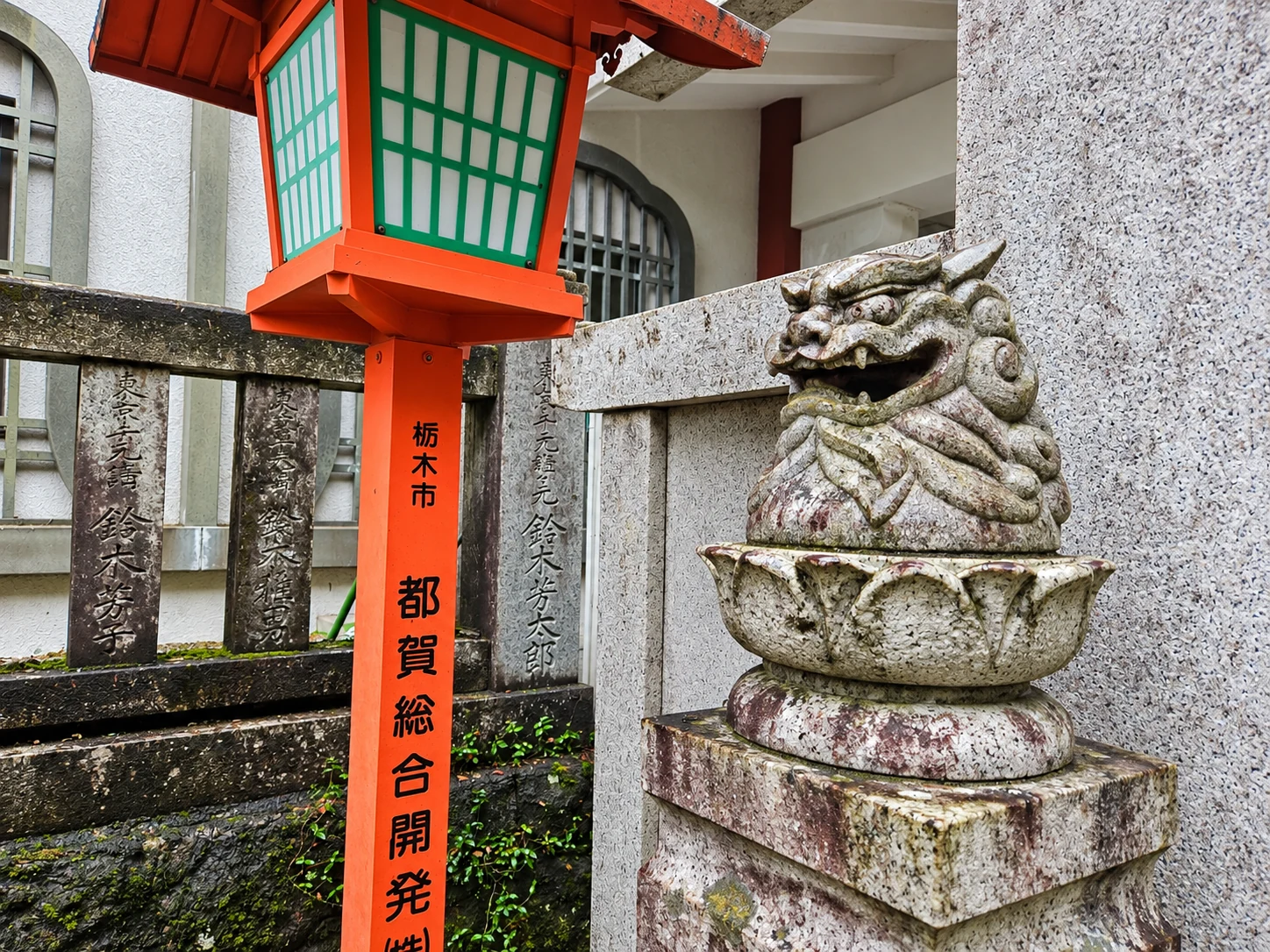
There are places in Japan that are beautiful in an obvious way — perfectly maintained gardens, famous temples, picturesque streets and viewpoints that look exactly like the photographs.
And then there are places that feel completely different.
Izurusan Manganji in Tochigi Prefecture is one of those places.
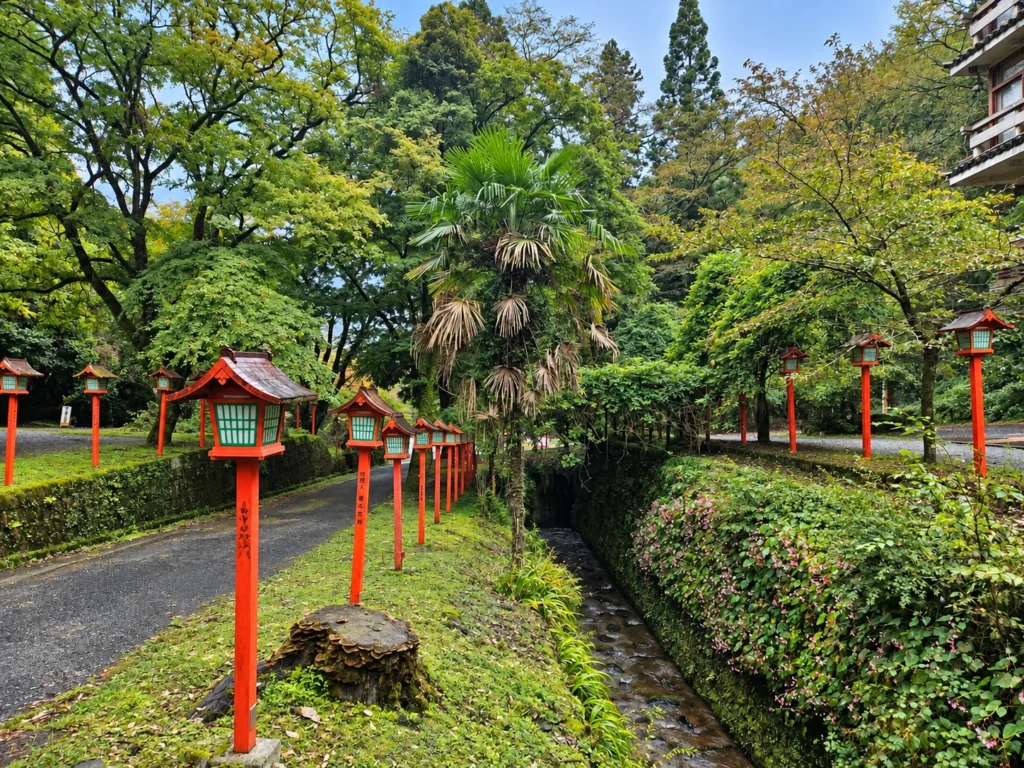
Tucked away in the mountains, this ancient Buddhist temple is surrounded by moss-covered stones, tall trees, red lanterns, small statues, streams and paths that disappear into the forest.
When I visited, it was raining, and somehow the rain made the entire place even more atmospheric.
Walking around Manganji, I kept thinking that this was exactly the kind of place where something magical could happen.
If you have ever watched Hayao Miyazaki’s Spirited Away, you may understand what I mean. I am not suggesting that Manganji inspired the film — there is no basis for saying that — but the atmosphere reminded me of it.
The combination of ancient buildings, wet moss, stone statues, dense forest and red lanterns creates a feeling that is almost unreal.
And the best part?
Izurusan Manganji makes a fascinating day trip from Tokyo.
Where Is Izurusan Manganji?
Izurusan Manganji is located in Tochigi City, Tochigi Prefecture, north of Tokyo.
The temple stands in a forested mountain area near the source of the Izuru River, surrounded by dense natural forest and cedar trees. The natural setting is one of the most memorable parts of visiting this temple.
The address is:
288 Izurumachi, Tochigi City, Tochigi Prefecture, Japan
Manganji is not the kind of attraction where you step off a train and immediately find yourself at the entrance. The temple is located in a mountain area, and getting there is part of the experience.
Getting There from Tokyo
If you are coming from Tokyo, I would personally recommend renting a car.
Manganji is located in a mountainous area, and having a car makes the journey much more convenient. It also gives you the freedom to explore the surrounding area and stop for lunch at one of the local soba restaurants.
However, you don’t need a car to visit Manganji.
Public transportation is also available, so you can easily make the trip without driving if you prefer.
A Temple More Than 1,200 Years Old
One of the first things that makes Izurusan Manganji so fascinating is its history.
According to temple tradition, Manganji was founded in 765 by Shōdō Shōnin, a Buddhist monk closely associated with the development of Buddhism in the Nikko area.
That means the temple has a history of more than 1,200 years.
Of course, the buildings you see today are not 1,200 years old.
The current main hall, for example, dates from the 18th century. It was rebuilt in 1764 and is designated as a tangible cultural property of Tochigi Prefecture. The building is also famous for its elaborate architectural carvings.
But the age of the temple becomes much easier to appreciate once you walk into the surrounding forest.
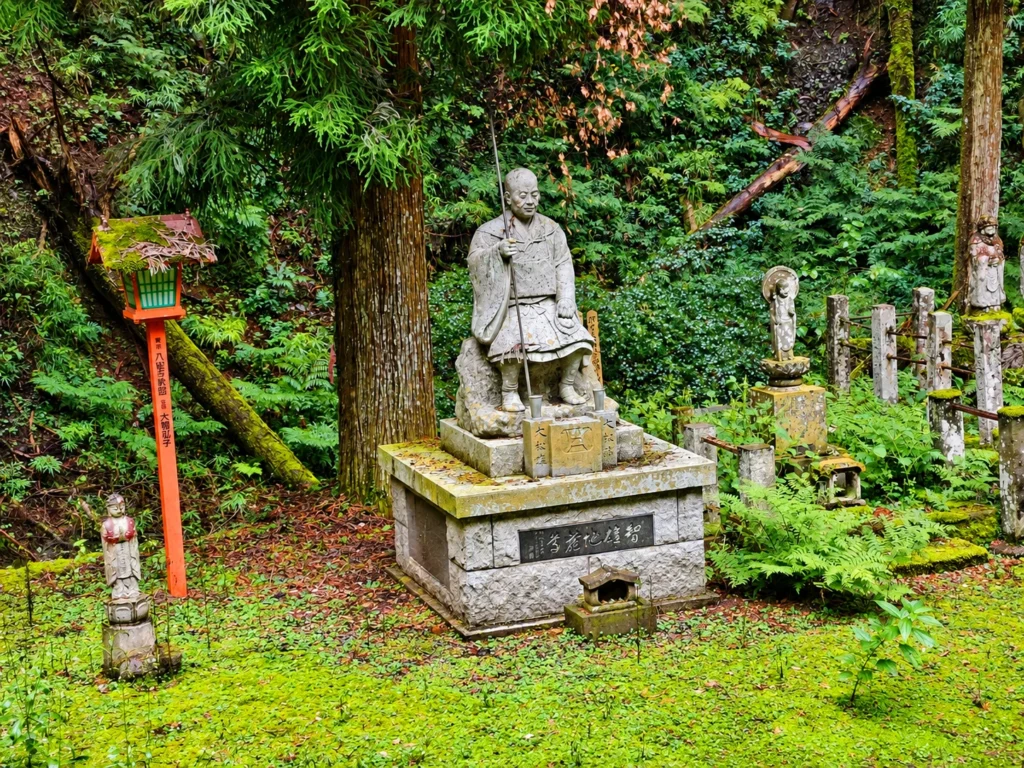
Moss covers stones and monuments. Trees grow around the paths. Small statues sit quietly beneath the branches, and red lanterns appear between the greenery.
It feels as if the forest has slowly taken the temple back.
That was one of my favorite things about Manganji.
Why Manganji Reminded Me of Spirited Away
I know that comparing a Japanese temple to Spirited Away can sound predictable, but this was genuinely the first thought I had while walking through Manganji.
The difference is that Manganji doesn’t feel like a movie set.
It feels old, natural and slightly mysterious.
The moss-covered stones, dark forest, wet paths, red lanterns and small statues create an atmosphere that feels almost suspended in time.
On a sunny day, the temple would probably look completely different.
But on a rainy day, the resemblance feels even stronger.
The rain makes the forest darker and greener. Moss becomes brighter, stone surfaces shine, and the paths seem to disappear deeper into the trees.
At some points, I honestly expected one of the paths to lead somewhere completely unexpected.
This is also a wonderful place for photography.
You don’t need a dramatic viewpoint or a famous landmark. The details are what make the photographs interesting:
A moss-covered stone.
A red lantern hidden between trees.
A tiny bridge over water.
An old monument.
A snail moving through the vegetation.
And, if you’re lucky — or unlucky, depending on how you feel about spiders — some enormous webs stretched between the trees.
The Main Hall of Manganji
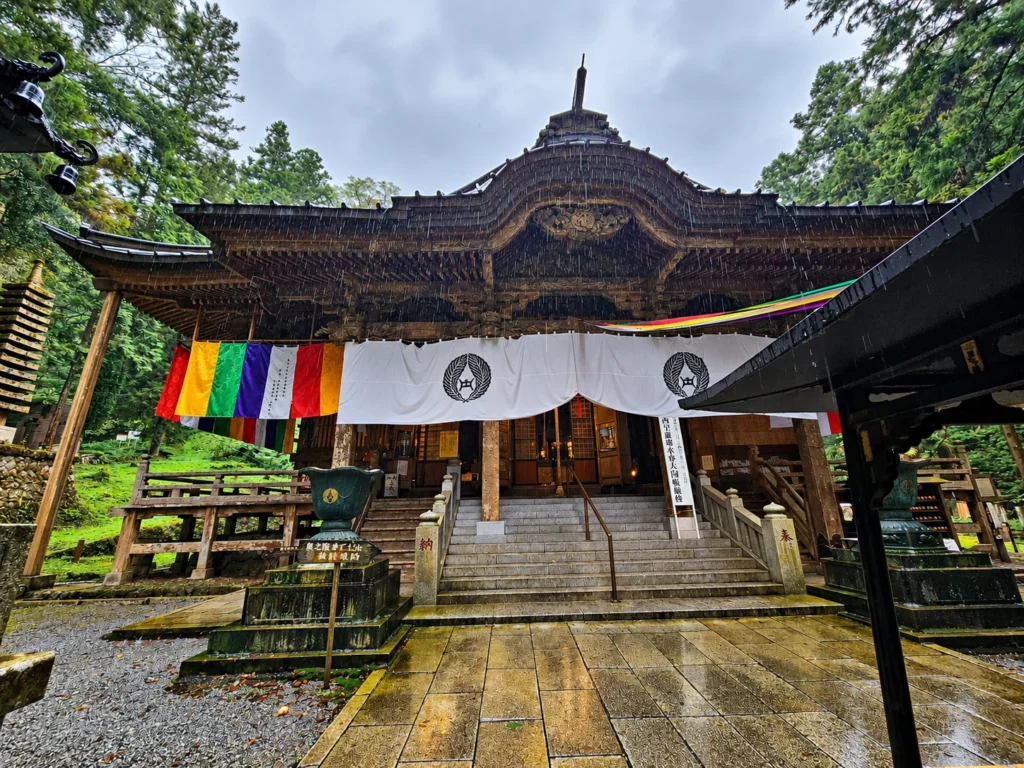
The main hall, or hondō, is one of the most important architectural features of Izurusan Manganji.
The present building dates from the 18th century and features detailed architectural carvings. It is designated as a tangible cultural property of Tochigi Prefecture and is traditionally counted among the Three Great Main Halls of Japan.
What I particularly liked was the way the building fits into its surroundings.
The main hall isn’t standing alone against a perfectly manicured lawn.
Instead, there is forest, moss, water and greenery all around it.
When I visited, it was raining, so the roof and wooden surfaces were wet and the surrounding forest looked incredibly deep and green.
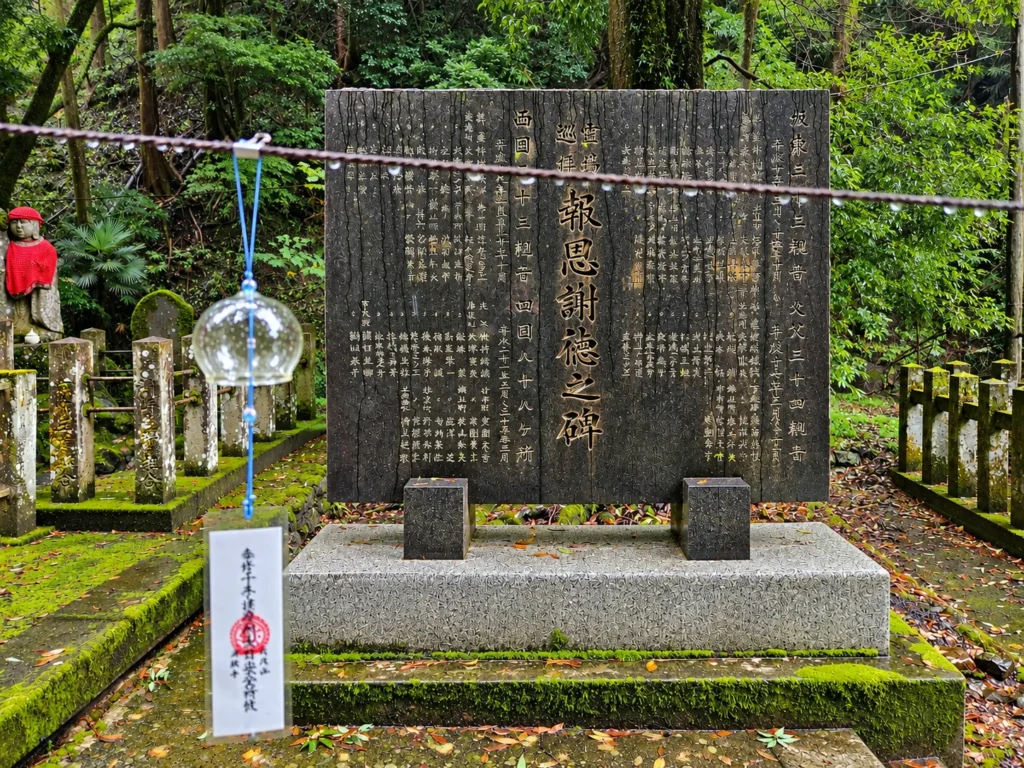
This is one of those places where I would recommend slowing down.
Don’t just walk up, take one photograph and leave.
Look at the roof.
Look at the wooden details.
Look at the decorations.
Then turn around and look at the forest.
The setting is almost as important as the building itself.
A Forest Filled With Stone Statues and Moss
One of my favorite things about Izurusan Manganji was the number of small details hidden around the temple grounds.
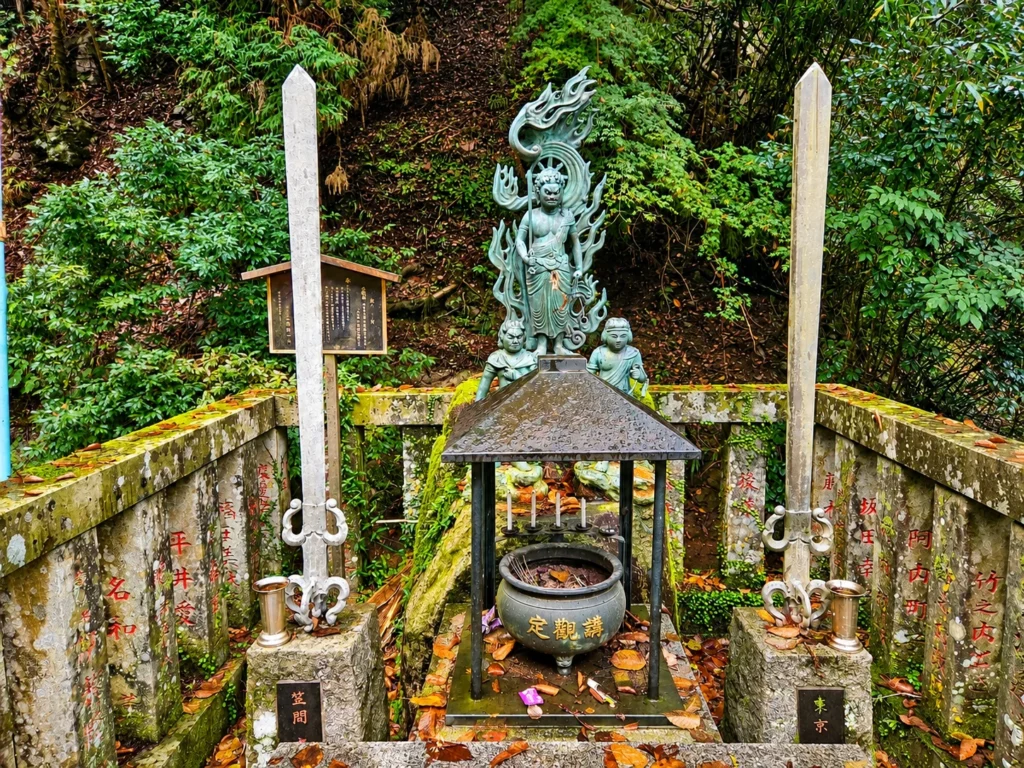
There are Buddhist statues, memorial stones, Jizō figures, stone pagodas and other religious objects scattered throughout the area.
Many have been softened by time and weather.
Some are almost completely surrounded by moss.
Others sit beside paths or beneath trees, partly hidden by vegetation.
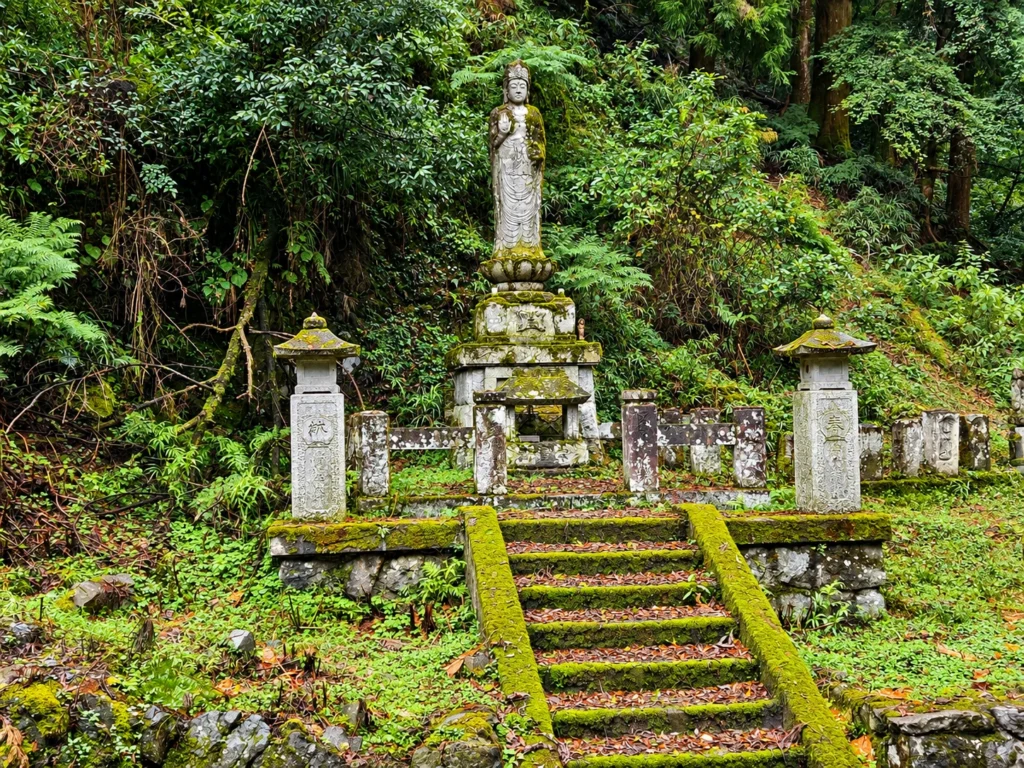
This is another reason Manganji feels different from some of Japan’s more famous tourist attractions.
You don’t get the feeling that every detail has been arranged specifically for visitors.
Instead, the landscape feels organic.
The forest grows around the religious structures rather than simply serving as a background.

There are also beautiful Buddhist and Kannon statues throughout the grounds, including a white statue with a moss-covered base that looked particularly striking against the surrounding greenery.
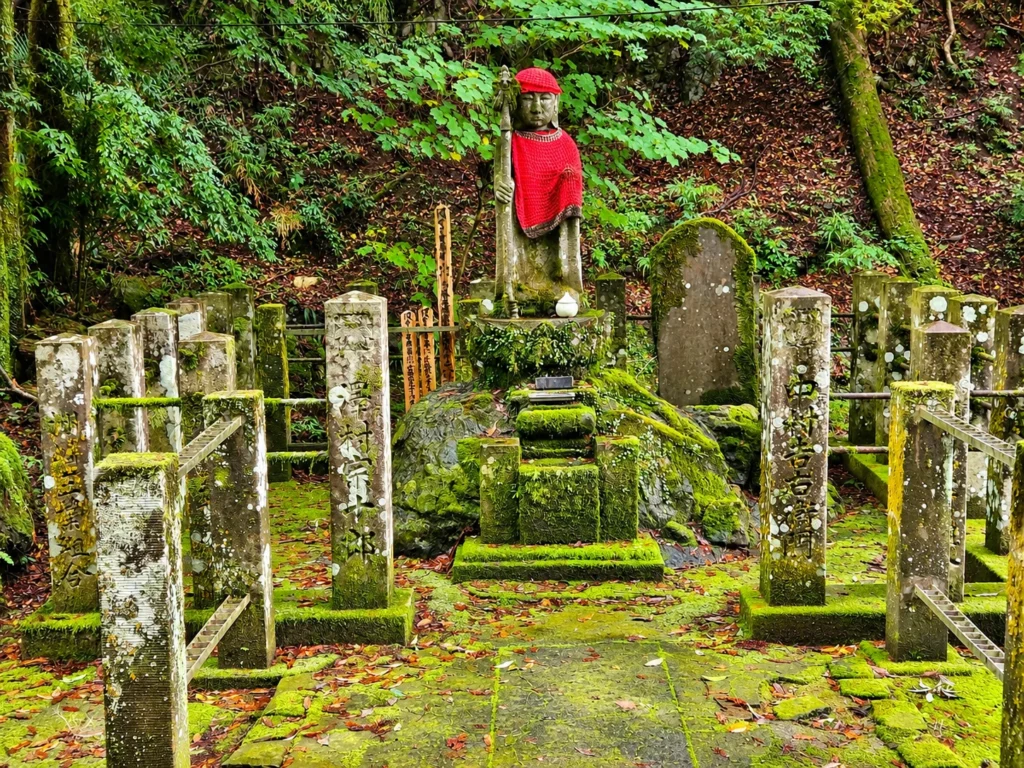
If you enjoy Japanese temples, traditional sculpture, history or photography, you could easily spend much longer here than you originally planned.
Red Lanterns Through the Forest
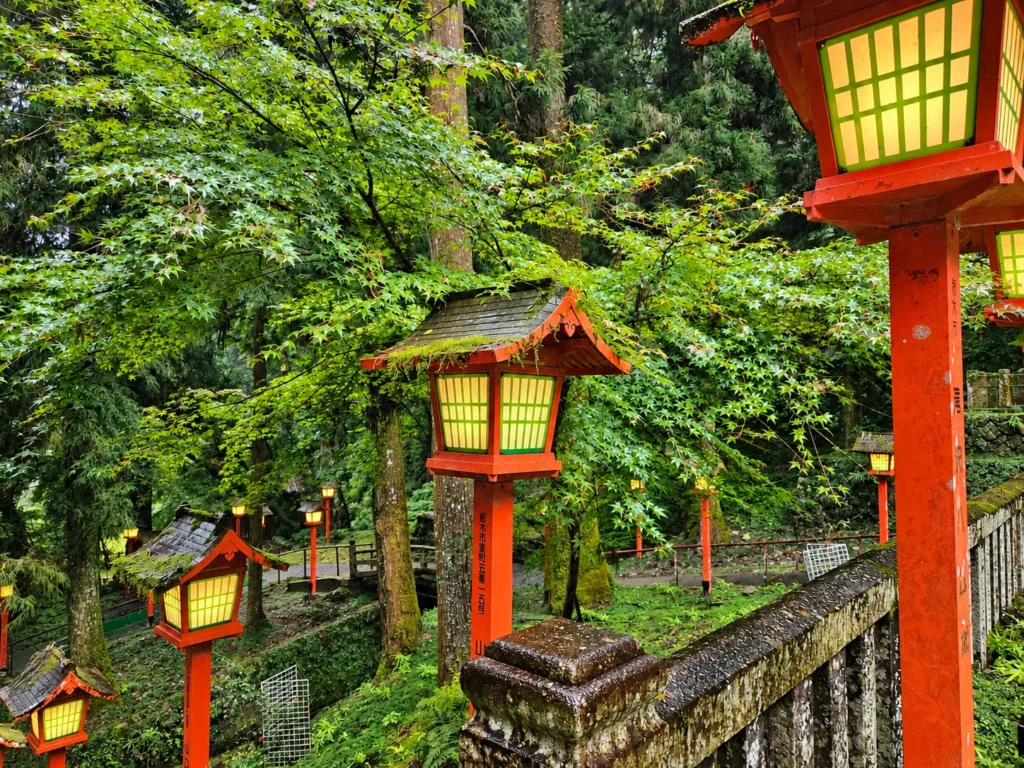
The red lanterns are probably some of the most photogenic details at Manganji.
They line sections of the paths and appear around the temple grounds, creating a beautiful contrast with the deep green of the forest.
I especially liked the combination of red, green and weathered grey stone.
It looks almost cinematic.
And when the ground is wet after rain, the colors become even richer.
The lanterns also add to the slightly mysterious atmosphere that made me think of Spirited Away.
There is something about walking between rows of red lanterns in an ancient forest that feels completely different from visiting a temple in the middle of a busy city.
Water, Ponds and the Dragon Purification Basin
Water is another important part of the landscape.
There are small ponds, streams and wet areas around the temple, with stones and little bridges incorporated into the scenery.
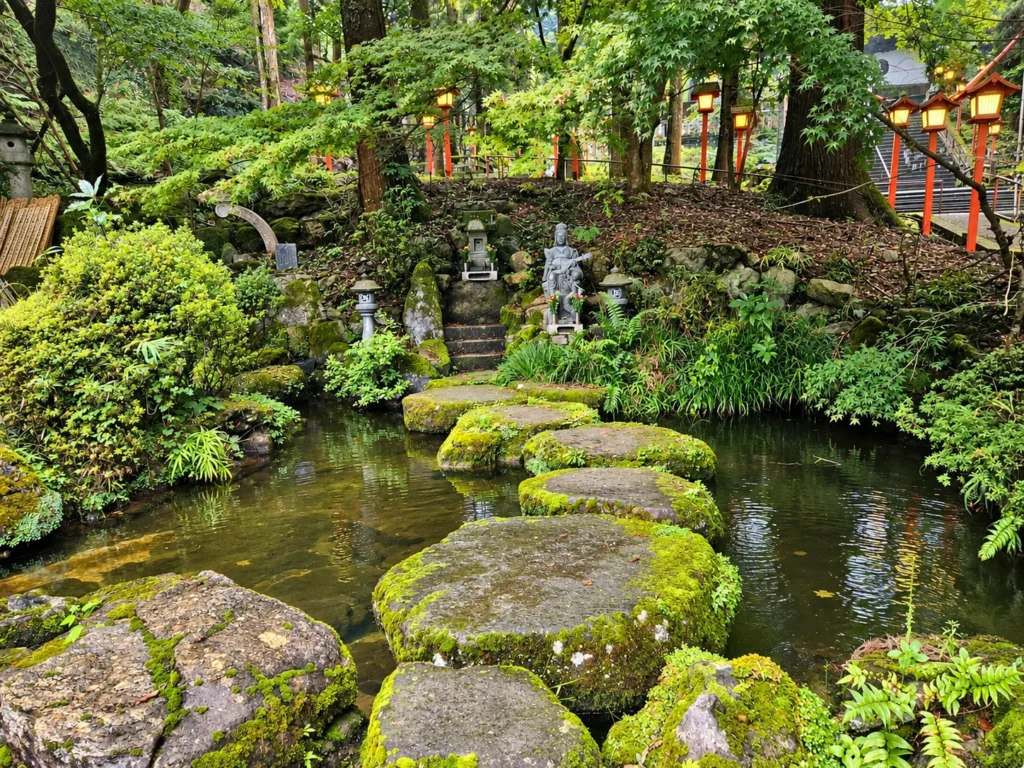
I loved how naturally everything seemed to fit together.
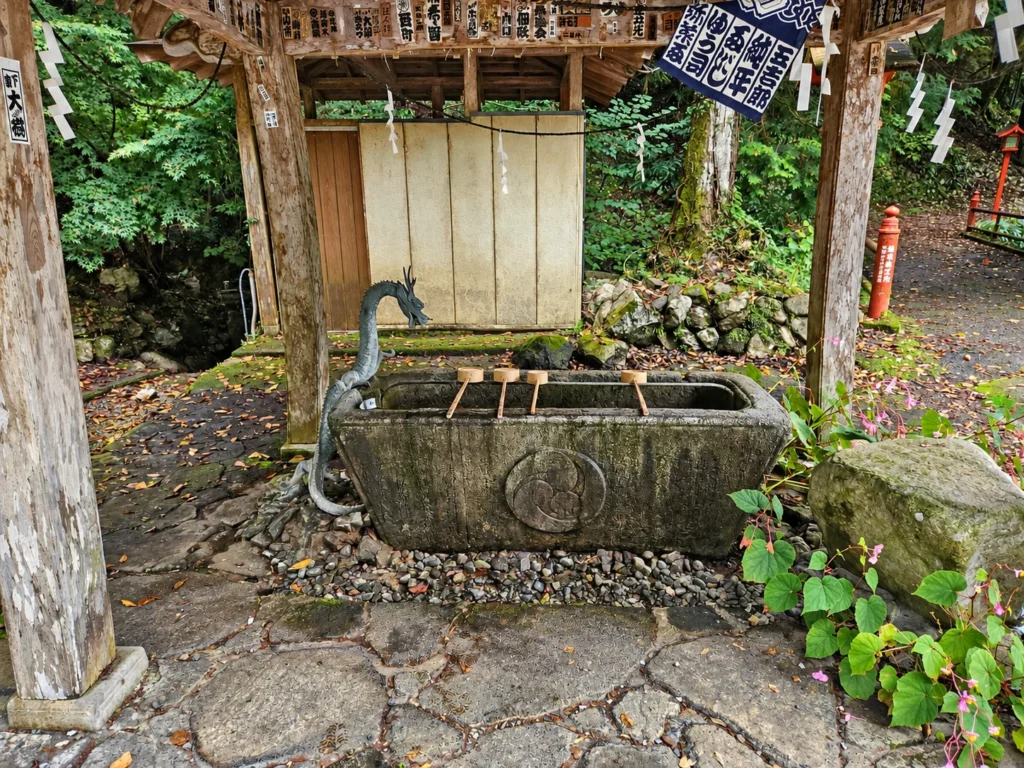
There is also a traditional purification basin decorated with a dragon, another beautiful detail worth looking for.
Rather than rushing from one famous object to another, I recommend simply following the paths and seeing what you discover.
That is really the best way to experience Manganji.
Okunoin and the Sacred Cave
If you have enough time, don’t stop at the main temple grounds.
One of the more unusual parts of the temple complex is Okunoin, located farther up the mountain.
The route leads toward a limestone cave where a natural formation is traditionally venerated as the rear view of an Eleven-Faced Kannon. The site is associated with prayers for conception, safe childbirth and childrearing.
The walk to Okunoin is part of the experience.
You continue deeper into the mountain landscape, following stone steps and a forest path.
At this point, the visit starts feeling less like ordinary sightseeing and more like a walk through a sacred natural landscape.
Okunoin currently has a separate admission fee of ¥300 for adults and ¥200 for children. Opening hours vary by season, so it is worth checking the latest information before your visit.
The Waterfall and Mountain Walk
Behind the main hall is Daihi-no-taki, a waterfall approximately eight metres high.
The waterfall is associated with takigyō, a form of ascetic practice performed beneath a waterfall. According to local tourism information, this practice continues throughout the year.
There is also a mountain path between the main temple area and Okunoin.
If you enjoy walking through nature, I would definitely allow extra time for this part of the visit.
The surrounding area is known for its forests and limestone landscape, so Manganji isn’t simply a temple sightseeing stop. It is also an opportunity to spend some time in the mountains.
Autumn, Spiders, Snails and the Wildlife of the Forest
One of the things that surprised me most was how much life there was around the temple.
Autumn here isn’t only about beautiful leaves. The forest is full of small creatures, too.
During my visit, I noticed large spiders, enormous spider webs stretched between the trees, snails and many other small creatures living among the moss and vegetation.
The huge webs were especially striking.
Some were almost impossible to miss, stretching between branches and catching the light and moisture in the forest.

If you are not particularly fond of spiders, keep your eyes open when walking between the trees!
But personally, I found it beautiful.
The combination of autumn colors, wet moss, old stone, red lanterns and delicate spider webs creates an incredibly atmospheric scene.
It is one of those places where the wildlife doesn’t feel separate from the landscape.
It is part of the landscape.
The forest doesn’t feel decorative.
It feels alive.
And that makes the experience much more memorable than walking through a perfectly manicured garden.
The White Fox Statues
Another detail that immediately caught my attention was a group of white fox statues.

I wouldn’t visit Manganji expecting one single famous monument that explains the entire temple.
Instead, there are many smaller details like this that make you stop and wonder about their stories and meanings.
This is one of those places where I recommend looking carefully rather than simply following a checklist of attractions.
Don’t Leave Without Trying Izuru Soba
After exploring the temple, there is one thing I would definitely recommend doing:
try Izuru soba.
Izuru is known for its local soba tradition, which has historical connections with the pilgrims who visited Manganji. The area continues to be known for handmade soba restaurants today.
And this isn’t just a case of saying, “You should try the local food because every travel article says so.”
I actually tried it.
And it was really delicious.

The noodles had a pleasant, firm texture and a simple, earthy buckwheat flavor. I especially enjoyed them with tempura.
After walking through the cool, rainy mountain landscape, a plate of fresh soba and crispy tempura was exactly what I wanted.
The area is also known for its clear natural water and long-standing soba-making tradition, which makes the meal feel especially connected to the surrounding mountains.
There is also a traditional style known as kanzarashi soba, associated with seasonal preparation using cold water and cold winter air.
So if you are planning a trip to Manganji, I wouldn’t treat lunch as an afterthought.
Plan time for soba.
There are several soba restaurants around the Izuru area. One example is Izuruya, a long-established handmade soba restaurant near the approach to Manganji.
For me, the combination of Manganji + a forest walk + Izuru soba with tempura makes a very satisfying day trip.
Omamori, Omikuji, Goshuin and Small Souvenirs
There are also small souvenirs available around the temple, including omamori, keychains and other temple-related items.
I noticed several things that would make nice small souvenirs or gifts.
From what I remember, prices started at around ¥1,000, although I don’t remember the exact price of each item, so it’s better to check the current prices when you visit.
You can also try a traditional omikuji, or Japanese fortune slip. During my visit, the fortune slips were ¥100, making it a fun and inexpensive little part of the experience.
Manganji also offers goshuin, which is listed among the attractions associated with the temple.
If you collect goshuin during your travels around Japan, this is another reason to bring your goshuincho with you.
How to Get to Izurusan Manganji from Tokyo
If you are coming from Tokyo, I would personally recommend renting a car.
Manganji is located in a mountainous area, and having a car makes the journey much more convenient. It also gives you the freedom to explore the surrounding area and stop for lunch at one of the local soba restaurants.
However, you don’t need a car to visit Manganji.
Public transportation is also available.
By Car
From the Tochigi Interchange, Manganji is approximately a 30-minute drive. Free parking is available near the temple, with space for around 50 cars.
From Tokyo, I would plan this as a full-day trip rather than trying to rush through the temple and drive straight back.
Having a car also makes it easier to combine Manganji with other attractions in Tochigi.
By Public Transportation
You can also visit without a car.
From Tochigi Station, take the Fureai Bus Terao Line to the final stop, Izuru Kannon. From there, it is approximately a 10-minute walk to Manganji.
The bus journey takes approximately 70 minutes.
Public transportation is certainly possible, especially if Manganji is your main destination. But if you want to explore more of the surrounding area and stop for soba, a rental car gives you much more flexibility.
Practical Information
| Information | Details |
|---|---|
| Name | Izurusan Manganji |
| Location | Tochigi City, Tochigi Prefecture |
| History | Traditionally founded in 765 |
| History of the temple | More than 1,200 years |
| Main attractions | Temple, forest, statues, lanterns, waterfall and Okunoin |
| Okunoin admission | ¥300 adults / ¥200 children |
| Parking | Free |
| Public transportation | Fureai Bus from Tochigi Station |
| Car access | About 30 minutes from Tochigi IC |
| Local food | Izuru soba |
| Goshuin | Available |
| Omikuji | ¥100 during my visit |
| Best for | Nature, photography, Japanese temples, history and day trips |
The temple grounds are currently listed as open from 8:30 AM to 5:00 PM. Okunoin has shorter seasonal opening hours: 8:30 AM–4:00 PM from April to September and 8:30 AM–3:00 PM from October to March. The temple is currently listed as open year-round.
Because prices and opening information can change, it is always a good idea to check the official information before travelling.
When Is the Best Time to Visit Izurusan Manganji?
Manganji can be beautiful throughout the year, but I particularly liked the atmosphere on a rainy or cloudy day.
Rain brings out the green of the moss and forest and makes the old stone surfaces look even older.
Spring and early summer bring fresh greenery.
Summer is lush and deeply green.
Autumn is especially beautiful, with changing foliage adding warm colors to the forest. Local tourism information specifically highlights both fresh greenery and autumn foliage as attractive times to visit.
And autumn has another unexpected attraction: the forest is full of life.
The combination of colorful leaves, moss, huge spider webs, snails and old stone monuments creates an atmosphere that is completely different from a typical autumn sightseeing spot.
And in winter, the atmosphere would be completely different again.
If you enjoy photography, I wouldn’t necessarily be disappointed by a rainy forecast.
At Manganji, rain is part of the atmosphere.

Is Izurusan Manganji Worth Visiting?
For me, Izurusan Manganji was one of those places that stayed in my mind after I left.
This isn’t a temple I would recommend because it has one spectacular landmark that you can photograph in five minutes.
The attraction is the whole experience.
The ancient history.
The forest.
The moss.
The stone statues.
The red lanterns.
The rain.
The waterfall.
The sacred cave.
The enormous spider webs.
The snails and small creatures hiding among the vegetation.
The quiet mountain paths.
And, of course, the soba waiting for you afterward.
If you love atmospheric places, traditional Japan, quiet mountain temples or photography, Izurusan Manganji is a wonderful addition to a Tochigi itinerary.
And if you’re a fan of Spirited Away, you may find yourself thinking the same thing I did while walking through the wet forest:
Where exactly does this path lead?
Maybe that’s the best thing about Manganji.
It doesn’t feel like a place you can completely understand after one visit.
It feels like somewhere you could return to in another season, in different weather, and see an entirely different temple.
Izurusan Manganji is more than 1,200 years old — and the forest around it feels as if it has been quietly keeping its secrets for just as long.



No responses yet