
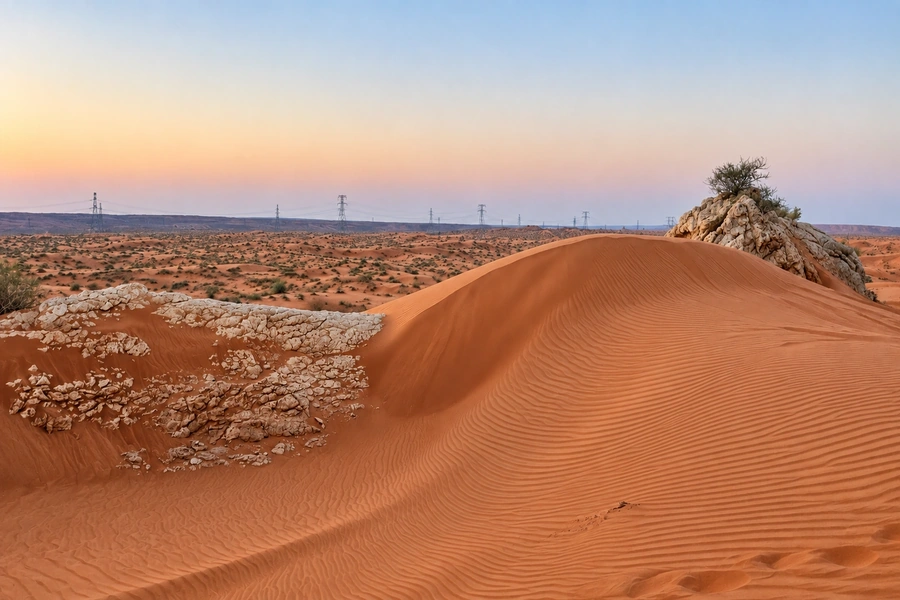
Fossil Rock, ancient landscapes, desert wildlife and a different side of Sharjah
There is a side of the United Arab Emirates that looks nothing like Dubai’s skyline, luxury hotels or carefully staged desert camps.
It is quieter. Older. Wilder.
In the Central Region of Sharjah, the landscape around Mleiha stretches across red-gold dunes, rocky outcrops and wide open plains. Here, the desert tells a story that goes back millions of years. Archaeological discoveries reveal an extraordinarily long history of human activity, while the rocks preserve evidence of an ancient marine environment.
And after sunset, the desert reveals another side of itself.
This is Mleiha — home to Fossil Rock, archaeological sites, dramatic desert landscapes, wildlife and remarkably clear night skies.
If you are looking for a different experience beyond the usual Dubai desert safari, Mleiha deserves a place on your UAE itinerary.
A Different Side of the UAE
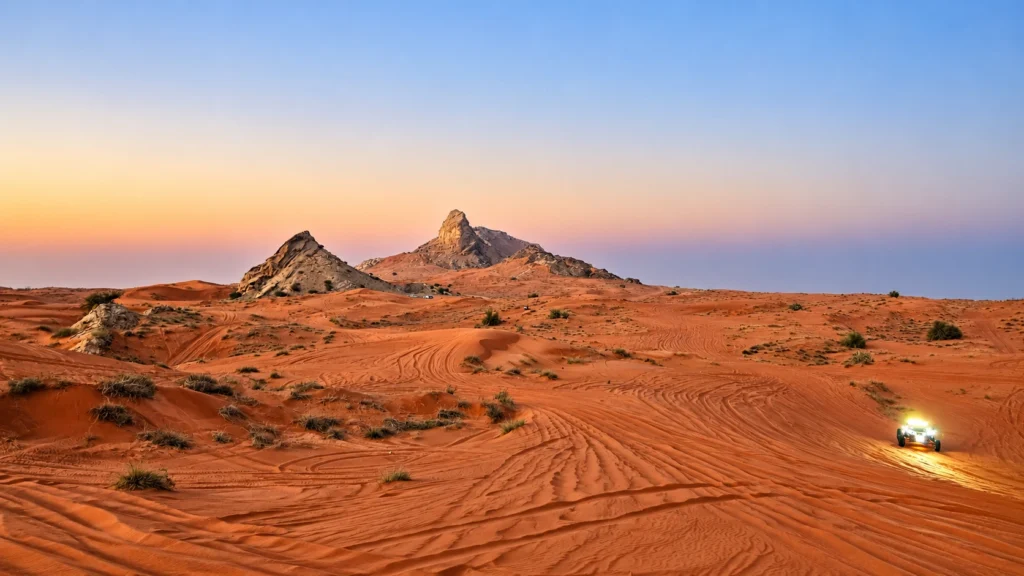
Mleiha is located in Sharjah’s Central Region, away from the dense development of the UAE’s coastal cities.
The journey inland changes the scenery completely. Buildings gradually disappear, the roads become quieter, and the horizon opens into an enormous desert landscape interrupted by rocky hills and dunes.
The area is also historically significant. The wider Faya Palaeolandscape, which includes the Mleiha–Faya region, was inscribed on the UNESCO World Heritage List in 2025. Archaeological evidence indicates human presence in this landscape going back more than 210,000 years.
That history is one of the things that makes Mleiha different from a conventional desert attraction.
You are not simply visiting a beautiful landscape.
You are walking through a place that has been shaped by geology, climate and human activity for hundreds of thousands of years.
Fossil Rock: A Mountain Rising from the Sand
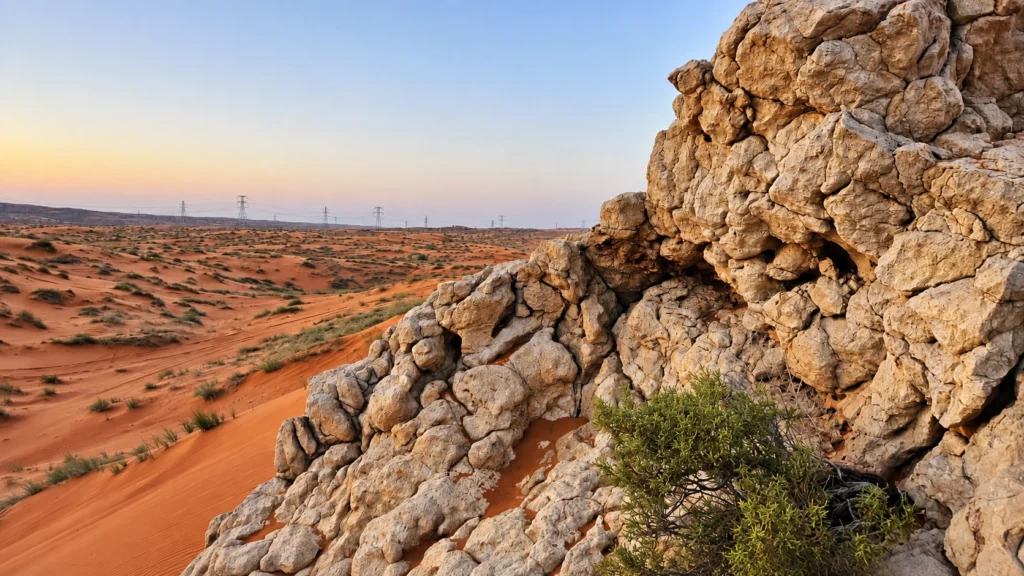
One of the best-known natural landmarks in the area is Fossil Rock, a dramatic rocky formation rising above the surrounding desert.
Its name comes from the marine fossils found in the rocks. Millions of years ago, the landscape of this part of Arabia was very different. Today, fossils embedded in the exposed rock provide a remarkable reminder of that ancient environment. Some fossils in the area are believed to be more than 80 million years old.
It is a strange feeling to stand in a dry desert surrounded by dunes while looking at evidence of an ancient sea.
That is what makes Fossil Rock more than just another scenic viewpoint.
It is a place where geological history is literally under your feet.
Red Dunes, Wind and Ancient Stone

The desert around Mleiha is particularly interesting for photographers because it is not simply a sea of identical dunes.
Sand meets exposed rock. Small bushes appear between the dunes. Wind creates delicate patterns across the surface, while old rocky formations rise unexpectedly from the landscape.
The textures are constantly changing.
At midday, the desert can look pale and almost monochromatic. Near sunset, the sand becomes warmer and more saturated, while the rocks catch the last sunlight of the day.
For photography, the hour before sunset is especially rewarding.
But don’t look only at the horizon.
Look down.
The patterns in the sand can be just as impressive as the mountains.
A Landscape Where the Past Meets the Present
There is another unexpected element in the Mleiha landscape: modern infrastructure.
Huge electricity pylons cross parts of the desert, creating an unusual contrast with the ancient rocks and untouched-looking dunes.
At first, they may seem out of place.
But photographically, they tell an interesting story.
On one side, there are geological formations millions of years old. On the other, modern infrastructure belonging to a rapidly developing country.
It is a very UAE landscape: deep history and modern technology sharing the same horizon.
Mleiha After Dark
During the day, the desert seems almost empty.
After sunset, that impression changes.
Temperatures fall, the wind becomes easier to notice and small animals begin moving through the sand.
During my visit, I encountered several nocturnal creatures, including a snake, a spider and a tiny gecko.
These encounters made the desert feel completely different from the landscape I had seen during daylight.
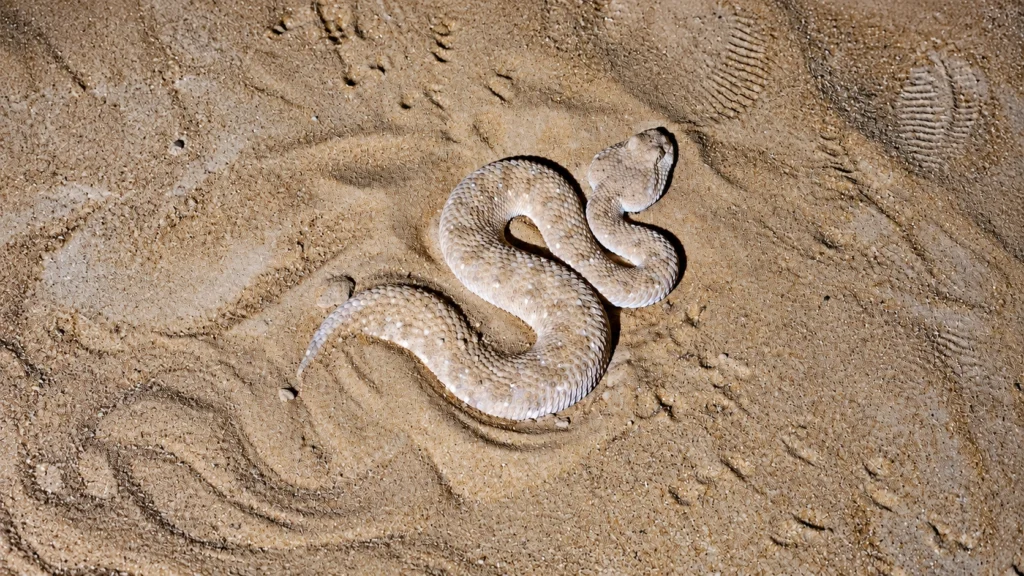
A Desert Snake
Seeing a snake in the desert at night is a good reminder that this seemingly empty landscape is actually a living ecosystem.
The snake in this photograph cannot be reliably identified to species level from the image alone, so it is better not to guess.
The practical lesson is more important: if you are walking through the desert after dark, use a flashlight and watch where you put your hands and feet.
Do not reach into holes, cracks or spaces underneath rocks.
The desert is beautiful, but it is not a petting zoo.
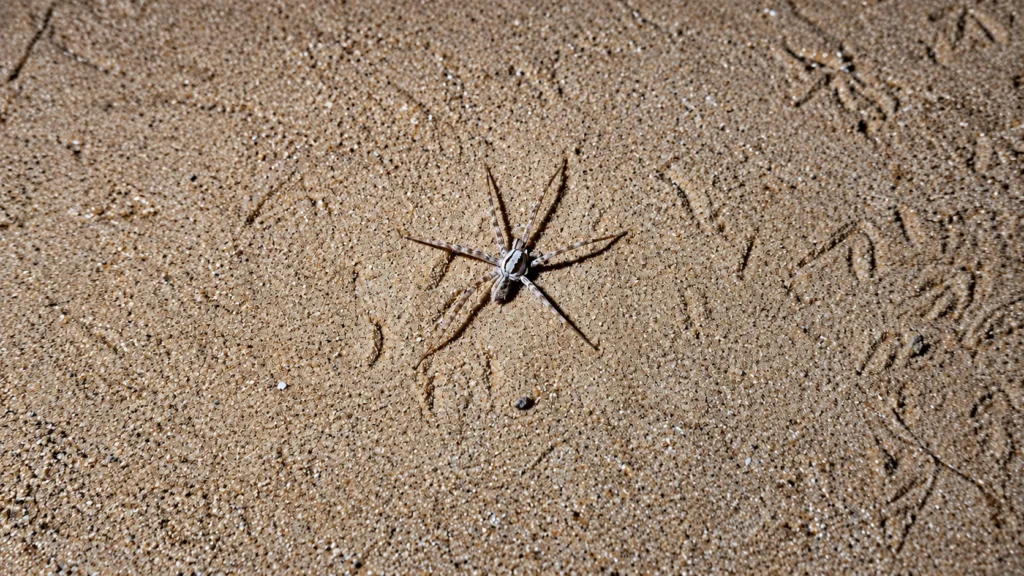
A Spider in the Sand
A flashlight can reveal an entirely different world.
Small spiders and insects that are almost impossible to notice during the day suddenly become visible against the sand.
For photographers, nighttime wildlife can be surprisingly rewarding.
The best approach is simple: slow down, use a flashlight and pay attention to the ground.
The less you rush, the more you see.
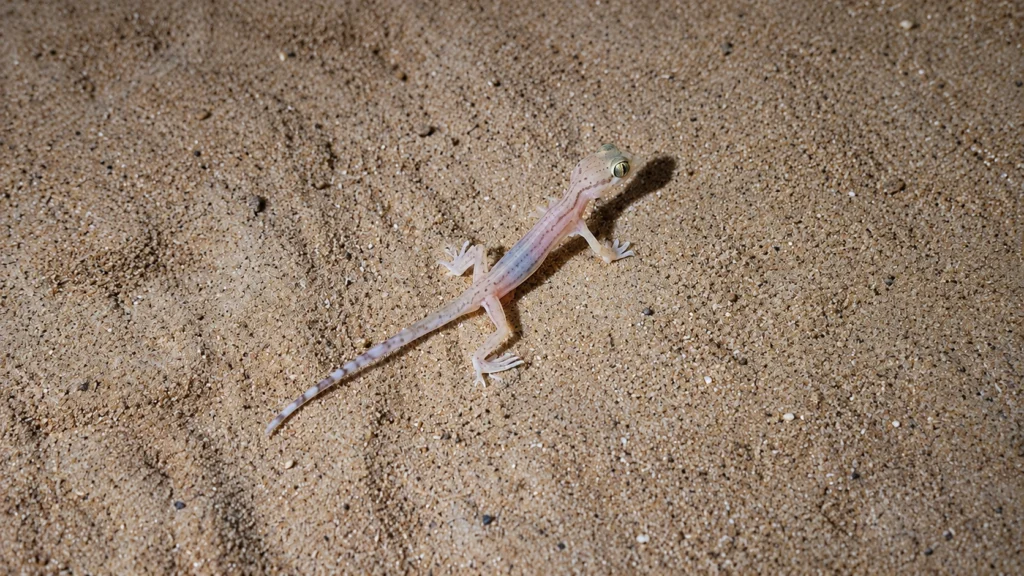
A Tiny Desert Gecko
This tiny gecko was another unexpected encounter.
Its pale body almost disappears against the sand, which is exactly why small desert animals can be so difficult to spot.
Moments like this are one reason I would recommend staying in Mleiha after sunset rather than treating the area as a quick daytime excursion.
The desert changes completely once the sun goes down.
Things to Do in Mleiha
Mleiha offers considerably more than a visit to Fossil Rock.
1. Explore Fossil Rock
The obvious starting point is Fossil Rock itself.
Visitors can explore the surrounding landscape, see the exposed geological formations and enjoy wide views over the dunes.
The official Mleiha Fossil Rock hiking trail is approximately 6 km long and takes around 2–3 hours. The route includes sandy and rocky terrain, with some steep sections, and is considered suitable for visitors with a moderate level of fitness. There is no shade along the route.
A short steep rock-climbing section can also be challenging for some visitors.
For that reason, proper footwear and sufficient water are essential.
2. Go on a 4×4 Desert Adventure
If hiking isn’t your priority, a guided 4×4 excursion is an excellent way to explore the surrounding desert.
Organised experiences in the Mleiha area include desert drives and excursions to locations such as Fossil Rock.
For visitors without experience driving on sand, a professional guide is the sensible choice.
Sand looks harmless.
It isn’t.
A normal SUV can become very stuck surprisingly quickly.
3. Try Dune Bashing or Quad Biking
For something more adventurous, Mleiha also offers activities such as dune bashing and quad biking, depending on the operator and season.
These activities are best booked through an established operator, particularly if you have never driven on dunes before.
4. Visit the Mleiha Archaeological Centre
The Mleiha Archaeological Centre is worth including if you want to understand the history behind the landscape.
The centre provides information about the area’s archaeological discoveries and offers experiences connected with important sites around Mleiha.
This is where the destination really separates itself from a typical desert safari.
You can spend the same day looking at ancient archaeological evidence, exploring geological formations and driving through the dunes.
5. Go Stargazing
Mleiha is also an excellent place to experience the desert after dark.
Away from the largest urban centres, the open landscape provides an impressive setting for stargazing and astronomy experiences.
The region offers organised astronomy activities as well as desert accommodation designed around the surrounding landscape.
For an overnight stay, options include Al Faya Retreat and Moon Retreat.
If you have never spent a night in the UAE desert, this can be one of the most memorable parts of the trip.
Mleiha vs. Dubai Desert Safari
If you have already experienced a traditional Dubai desert safari, Mleiha offers something noticeably different.
Dubai desert experiences tend to focus on entertainment: dune driving, camel rides, camps, food and organised activities.
Mleiha is more about the landscape itself.
Here, you can combine:
- geology;
- archaeology;
- hiking;
- desert wildlife;
- photography;
- 4×4 adventures;
- stargazing;
- camping.
It feels less like a staged tourist attraction and more like an exploration of the UAE’s natural and historical landscape.
If your idea of a desert trip is a few hours of entertainment, Dubai has plenty of options.
If you want to understand the desert, choose Mleiha.
When Is the Best Time to Visit Mleiha?
The best season for visiting Mleiha is generally October through April, when temperatures are much more comfortable for outdoor activities.
October–November
An excellent period for photography and sunset excursions.
The summer heat begins to ease, although daytime temperatures can still be high.
December–February
The best overall period for most visitors.
These months are particularly comfortable for hiking, desert exploration, camping and spending several hours outdoors.
Winter nights can be surprisingly cool, so bring an extra layer if you plan to stay after sunset.
March–April
Still a very good time to visit, although temperatures begin rising.
Plan physically demanding activities for the morning or late afternoon.
May–September
This is the challenging season.
The UAE summer can make extended outdoor activities extremely uncomfortable, especially in the middle of the day.
If visiting during summer, plan activities around sunrise or sunset and check local conditions before heading into the desert.
For the Fossil Rock hiking trail, official guidance recommends early morning or late afternoon, partly because the route has no shade.
My recommendation
If you have a choice, I would choose November through March.
You get the best balance of comfortable temperatures, good outdoor conditions and pleasant evenings.
How to Get to Mleiha
Mleiha is easiest to visit by car.
The destination is located in Sharjah’s Central Region, inland from the coastal cities.
According to Sharjah Tourism, Mleiha is approximately 49 minutes from Dubai International Airport and around 39 minutes from Sharjah International Airport, although actual journey times depend on traffic and your precise destination.
From Sharjah city, Fossil Rock is roughly an hour away by car.
From Dubai
Drive towards Sharjah and then continue inland towards Mleiha.
For a first visit, I recommend using Mleiha Archaeological Centre as your main navigation point. From there, you can continue with organised excursions or follow directions to specific attractions.
Do you need a 4×4?
Not necessarily for reaching the main visitor facilities and Archaeological Centre.
However, if you plan to drive off-road across dunes, a suitable 4×4 is strongly recommended.
If you don’t have experience with desert driving, book a guided excursion instead.
It is cheaper than learning the hard way.
What to Bring to Mleiha
Desert trips are one of those situations where boring preparation matters.
Bring:
- plenty of drinking water;
- sunscreen;
- sunglasses;
- a hat;
- sturdy walking shoes;
- lightweight long clothing;
- a flashlight or headlamp;
- a power bank;
- snacks;
- basic first-aid supplies;
- extra water if you plan to hike;
- a light jacket for winter evenings.
The official hiking guidance also recommends plenty of water, sturdy footwear, sun protection and snacks.
And, of course, take your rubbish with you.
The less we leave behind, the better the desert remains for everyone.
A Perfect One-Day Mleiha Itinerary
If you have only one day, this is the itinerary I would recommend.
10:00 — Mleiha Archaeological Centre
Start with the history of the region.
11:30 — Archaeological Sites
Explore some of the surrounding heritage sites, preferably with a guide.
13:00 — Lunch and Break
Avoid doing a long hike during the hottest part of the day.
15:00 — Desert Adventure
Take a guided 4×4 excursion or head towards Fossil Rock.
16:30 — Fossil Rock
Explore the rocks and surrounding dunes.
Sunset — Photography
This is the moment to get your camera out.
The low sunlight transforms the colours and textures of the desert.
After Sunset — Stay
Don’t immediately leave.
Walk carefully with a flashlight, look for nocturnal wildlife and, if conditions are suitable, spend some time stargazing.
Evening — Dinner or Desert Camp
Return to your accommodation or stay overnight in one of the area’s desert retreats.
Why Mleiha Is Worth Visiting
The UAE has no shortage of spectacular attractions.
Mleiha is different.
It doesn’t need a skyscraper, a shopping mall or a man-made spectacle.
Its appeal comes from the landscape itself.
Here, you can stand among rocks containing evidence of an ancient marine environment, walk across dunes shaped by the wind, explore a region with an exceptionally long human history and then, after sunset, discover that the apparently empty desert is full of life.
That is what makes Mleiha memorable.
It is not simply a desert.
It is a landscape with layers — geological, archaeological, natural and human.
And perhaps the best time to understand it is not in the middle of the day, when the sun is blazing overhead.
It is in the quiet hour after sunset, when the colours fade, the temperature drops and the desert starts moving.
Mleiha Travel Guide at a Glance
| Location | Mleiha, Central Region, Sharjah, UAE |
| Main attraction | Fossil Rock |
| Best season | October–April |
| Best overall months | November–March |
| Best for | Hiking, photography, archaeology, geology, wildlife, 4×4 adventures and stargazing |
| Fossil Rock trail | Approx. 6 km / 2–3 hours |
| Best photography | Late afternoon, sunset and blue hour |
| Getting there | Car or organised excursion |
| 4×4 required? | Not for the main visitor facilities; recommended for off-road desert driving |
| Overnight options | Desert camps, Al Faya Retreat and Moon Retreat |
| Don’t forget | Water, sun protection, sturdy shoes and a flashlight |



No responses yet