
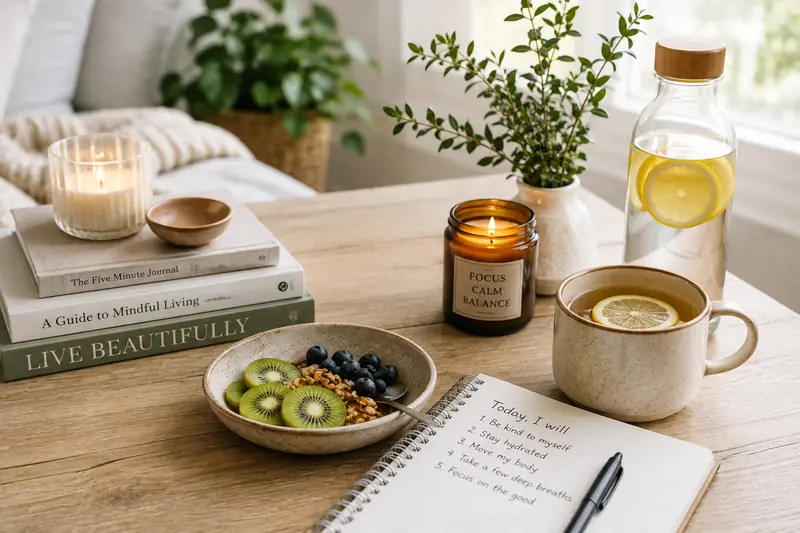
Wellness doesn’t have to mean waking up at 5 a.m., drinking a green juice and spending an hour doing yoga before work.
Honestly, most of us have enough going on already.
Sometimes taking better care of yourself means doing a few very ordinary things consistently: getting enough sleep, drinking more water, eating a proper meal, going outside for a while and giving yourself permission to slow down.
The most useful wellness habits are usually the ones that fit naturally into everyday life.
You don’t need to completely reinvent your routine. A few small changes can make your days feel calmer, more organized and a little more enjoyable.
Here are some simple habits worth trying.
1. Start Your Day Without Immediately Checking Your Phone

One of the easiest ways to make your morning feel less chaotic is to avoid reaching for your phone the moment you wake up.
Messages, emails, social media and news can wait a little.
Instead, give yourself 15–30 minutes to wake up properly.
Open the curtains, make your bed, drink some water, make coffee or tea and simply let your brain catch up with the fact that a new day has started.
You don’t have to create an elaborate morning routine.
Even a quiet few minutes can make a difference.
2. Drink More Water During the Day
It sounds almost too obvious, but hydration is one of those basic habits that is surprisingly easy to forget.
Keep a bottle or glass of water somewhere you can see it.
Drink some when you wake up, with meals and throughout the day.
If plain water feels boring, add lemon, cucumber, mint or berries.
The goal isn’t to obsess over a perfect number.
It is simply to make drinking water a normal part of your day.
3. Move Your Body Every Day
You don’t need to become a marathon runner to benefit from regular movement.
A walk around the neighborhood, gentle stretching, dancing while cooking or taking the stairs all count as movement.
If you spend a lot of time sitting, try getting up regularly throughout the day.
Even a short walk outside can be a welcome break from a screen.
The best form of movement is usually the one you actually enjoy enough to keep doing.
4. Make Your Meals More Nourishing

Healthy eating doesn’t have to mean eating salads every day.
A satisfying meal can be very simple.
Try building meals around a combination of:
- protein
- vegetables or fruit
- whole grains or another carbohydrate
- healthy fats
Think eggs and avocado on toast, salmon with rice and vegetables, yogurt with berries and nuts, or a simple homemade soup with a side salad.
You don’t need to make every meal perfect.
Consistency matters much more than perfection.
5. Create a Calmer Evening Routine
The way you spend the last hour of the day can affect how the evening feels.
Instead of rushing directly from work to bed, create a small transition.
Take a shower, make tea, tidy the kitchen, read a few pages of a book or simply sit somewhere comfortable.
Dimmer lighting can also help create a more relaxing atmosphere.
Your evening doesn’t have to be productive.
Sometimes the most useful thing you can do is nothing.
6. Protect Your Sleep

Sleep is one of the foundations of everyday wellbeing.
Try keeping your bedtime relatively consistent and make your bedroom comfortable, dark and quiet.
If possible, give yourself some time away from work and stimulating content before going to sleep.
A simple nighttime routine can signal to your brain that the day is coming to an end.
It doesn’t need to be complicated.
Clean pajamas, skincare, a book and a comfortable bed can be enough.
7. Spend More Time Outside
Even a short amount of time outdoors can provide a useful change of scenery.
Walk to the store instead of driving when practical.
Have your coffee outside.
Take a short walk after lunch.
Sit in a park.
Go somewhere with trees and water on the weekend.
You don’t need a dramatic hiking adventure.
Sometimes twenty minutes outside is exactly what you need after spending hours indoors.
8. Make Your Home Feel Good

Your surroundings can influence how you feel.
That doesn’t mean your home needs to look like a luxury hotel.
Small things can make it more comfortable:
- fresh flowers
- plants
- clean bedding
- soft lighting
- a pleasant candle
- a tidy kitchen
- comfortable blankets
- music you enjoy
You don’t need to redecorate the entire house.
Sometimes clearing one messy surface is enough to make a room feel completely different.
9. Take Small Breaks From Screens
If you work on a computer, it is easy to spend the entire day looking at one screen and then spend the evening looking at another.
Try creating small screen-free moments.
Have lunch away from your computer.
Take a walk without scrolling.
Read a physical book.
Make dinner without watching videos.
Even short breaks give your attention somewhere else to go.
10. Make Time for Things You Actually Enjoy
Wellness isn’t only about productivity.
It is also about enjoyment.
Cook something you love.
Listen to music.
Take care of your plants.
Visit a beautiful café.
Read a novel.
Go shopping.
Spend time with someone who makes you laugh.
Watch an old movie.
Whatever makes you feel like yourself again deserves a place in your routine.
11. Keep Your Space Tidy Enough to Feel Comfortable
You don’t need a perfectly organized home.
But there is a difference between a home that looks lived-in and a space that constantly makes you feel overwhelmed.
Try a simple ten-minute reset at the end of the day.
Put things back where they belong, clear the kitchen counter and prepare what you need for tomorrow.
Ten minutes is much easier to commit to than an imaginary three-hour cleaning marathon.
12. Give Yourself Time to Slow Down

We are very good at filling every empty moment.
If there is nothing happening, we reach for our phone.
If we have free time, we find another task.
But doing absolutely nothing for a few minutes can be surprisingly restorative.
Sit by a window.
Have your coffee slowly.
Look outside.
Listen to music.
Let your mind wander.
Not every minute needs to produce something.
How to Build Wellness Habits That Actually Last
The biggest mistake people make when starting a new routine is trying to change everything at once.
Monday becomes:
Wake up at 6.
Exercise.
Meditate.
Drink two liters of water.
Cook everything from scratch.
Journal.
Read 30 pages.
Go to bed at 9.
By Thursday, the entire plan has collapsed.
A better approach is to start with one or two habits.
For example:
Week 1: Drink more water.
Week 2: Add a daily walk.
Week 3: Create a relaxing evening routine.
Week 4: Improve your sleep schedule.
Small changes are much easier to maintain.
The 5-Minute Wellness Rule
When you don’t feel motivated, make the habit smaller.
Don’t want to exercise?
Walk for five minutes.
Don’t want to clean?
Tidy one surface.
Don’t want to cook?
Make something simple.
Don’t want to journal?
Write one sentence.
Don’t want to go outside?
Stand on the balcony or walk around the block.
Five minutes is better than nothing.
And very often, once you start, you’ll naturally continue.
Wellness Doesn’t Have to Be Expensive
You don’t need an expensive gym membership, luxury skincare products or a cabinet full of supplements to create a healthier lifestyle.
Some of the most useful wellness habits are completely free.
Go for a walk.
Drink water.
Sleep enough.
Open a window.
Stretch.
Cook at home.
Call a friend.
Spend time outdoors.
Put your phone away.
Read a book.
Clean your space.
Take a proper break.
The wellness industry may sell you a thousand products.
Your body and mind still appreciate the basics.
Create Your Own Simple Wellness Routine
If you want to start today, keep it very simple.
Morning
- Drink water
- Open the curtains
- Avoid your phone for a few minutes
- Have a nourishing breakfast or first meal
- Get some natural light
During the day
- Take regular movement breaks
- Drink water
- Eat a proper meal
- Spend some time outside
- Step away from your screen
Evening
- Tidy your space
- Put work away
- Take a shower
- Do something relaxing
- Reduce screen time
- Go to bed at a consistent time
You don’t have to follow every point.
Choose the ones that make sense for your life.
Final Thoughts
A better lifestyle rarely comes from one dramatic transformation.
It usually comes from small choices repeated often.
A glass of water.
A walk around the block.
A proper dinner.
An earlier bedtime.
A clean bedroom.
A quiet cup of tea.
Ten minutes without your phone.
These things may seem insignificant individually, but together they can change how your everyday life feels.
Wellness doesn’t have to be complicated.
It should make life feel better, not give you another list of things you are failing to do.
Start small, keep what works and forget the rest.
That is probably the most sustainable wellness routine of all.



No responses yet